

.svg)

.png)
Employee advocacy is sold on one number. Your employees collectively have around 10 times more connections than your company has followers, a figure that traces back to LinkedIn's own guide to employee advocacy and gets repeated by every vendor on this list.
The number is real. It is also about connections, not reach.
We checked what survives once posts are actually published. Across 894,168 LinkedIn posts from July 2025 to June 2026, the median personal-profile post reached 1,006 people. The median company-page post reached 659. That is roughly 1.5 times, not 10.
Advocacy still works. It just buys less than the pitch deck implies, and that changes which of these tools is worth a contract. Three of the six below will not quote you a price without a sales call, so the comparison starts with what is actually published.
The short answer
Four of these are built purely for employee advocacy, and three of those four quote only through sales. PostBeyond is the exception, which is the main reason it is first on the list.
What SocialHP does, and why teams look elsewhere
Social Horse Power is an employee advocacy platform. It is not a general social media manager, which matters when you are picking a replacement: the alternatives that fit are the ones built for the same job.
Its pitch is a "never login" philosophy. Employees do not learn new software. Marketing loads approved content centrally, and it goes out through employee accounts on LinkedIn, X, Facebook and Instagram on a schedule. There are approval workflows, a shared content library, analytics, and CRM and marketing-automation integrations.
.png)
The complaints that send people to this page are consistent. Pricing is demo-gated, so budgeting is guesswork until you are already in a sales cycle. The platform is priced and built for programs with a large number of enrolled employees, which makes it heavy for a team of twelve. And a scheduled, pre-approved post going out under someone's name is still a pre-approved post.
That last point is worth measuring rather than asserting, so we measured it.
What the reach data actually says
The 1.5x figure is worth unpacking, because the shape of the gap decides what you should buy. Our sample is 894,168 LinkedIn posts from July 2025 to June 2026: 704,259 from personal profiles and 189,909 from company pages, counting original posts with more than 100 impressions.
Source: AuthoredUp dataset, 1 July 2025 to 30 June 2026, original posts, impressions above 100.
So the 10x connection advantage converts into about 1.5x actual reach. Some of that is LinkedIn showing company-page posts to a smaller share of followers; some is that nobody has 10x connections who all log in on the same afternoon.
Here is the part that surprises people. The gap is reach, not engagement rate. Company pages hold a slightly higher median engagement rate than personal profiles, 2.63% against 2.37%. The people who see a company post engage with it at roughly the same rate they engage with anything else. There are simply fewer of them.
The gap is reach, not engagement rate
Personal profiles reach far more people than company pages. But the people who do see a company post engage with it slightly more often. Switch the left-hand metric to see how far the reach gap holds.
Median impressions
Personal profiles lead by 53%
Median engagement rate
Company pages lead by 11%
Personal profiles reach 1.5× as many people, yet company pages still hold the higher engagement rate. The advantage is distribution, not better content.
Volume metrics: AuthoredUp analysis of 704,259 personal-profile and 189,909 company-page posts, 1 Jul 2025 to 30 Jun 2026, original posts, impressions above 100. Engagement rate: the same query on the snapshot behind our company page benchmark (687,973 and 186,860 posts), so the two panels are the same window on counts taken weeks apart.

So advocacy is a distribution play. You are buying reach you cannot get from the page, not better content.
One more number, because it answers the objection that advocacy content gets ignored. Across 327,683 personal-profile posts, posts that mention the poster's employer reached a median 1,171 people, against 797 for posts that do not. Company-related content is not a drag on reach. This is a correlation rather than a controlled test, and the people who post about their employer skew toward those who post regularly, but it does argue against the idea that mentioning work kills a post.
Does mentioning your employer cost you reach?
Median performance across 327,683 personal-profile LinkedIn posts, July 2025 to June 2026. Pick a metric to compare.
+47% more people reached when the post mentions the employer
Source: AuthoredUp analysis of 327,683 personal-profile posts, July 2025 to June 2026. Correlation, not a controlled test: people who post about work also tend to post more often.
If you want to check your own page against this, our LinkedIn company page benchmark puts one post's numbers into percentile against 180,000+ real company-page posts, free.
1. PostBeyond
PostBeyond is the closest like-for-like replacement, and the only dedicated advocacy platform here that will tell you its price without a sales call.
It has been a wholly-owned subsidiary of Influitive since December 2021, and still runs under its own brand with its own product and roadmap. If a vendor tells you PostBeyond is discontinued, that is out of date.
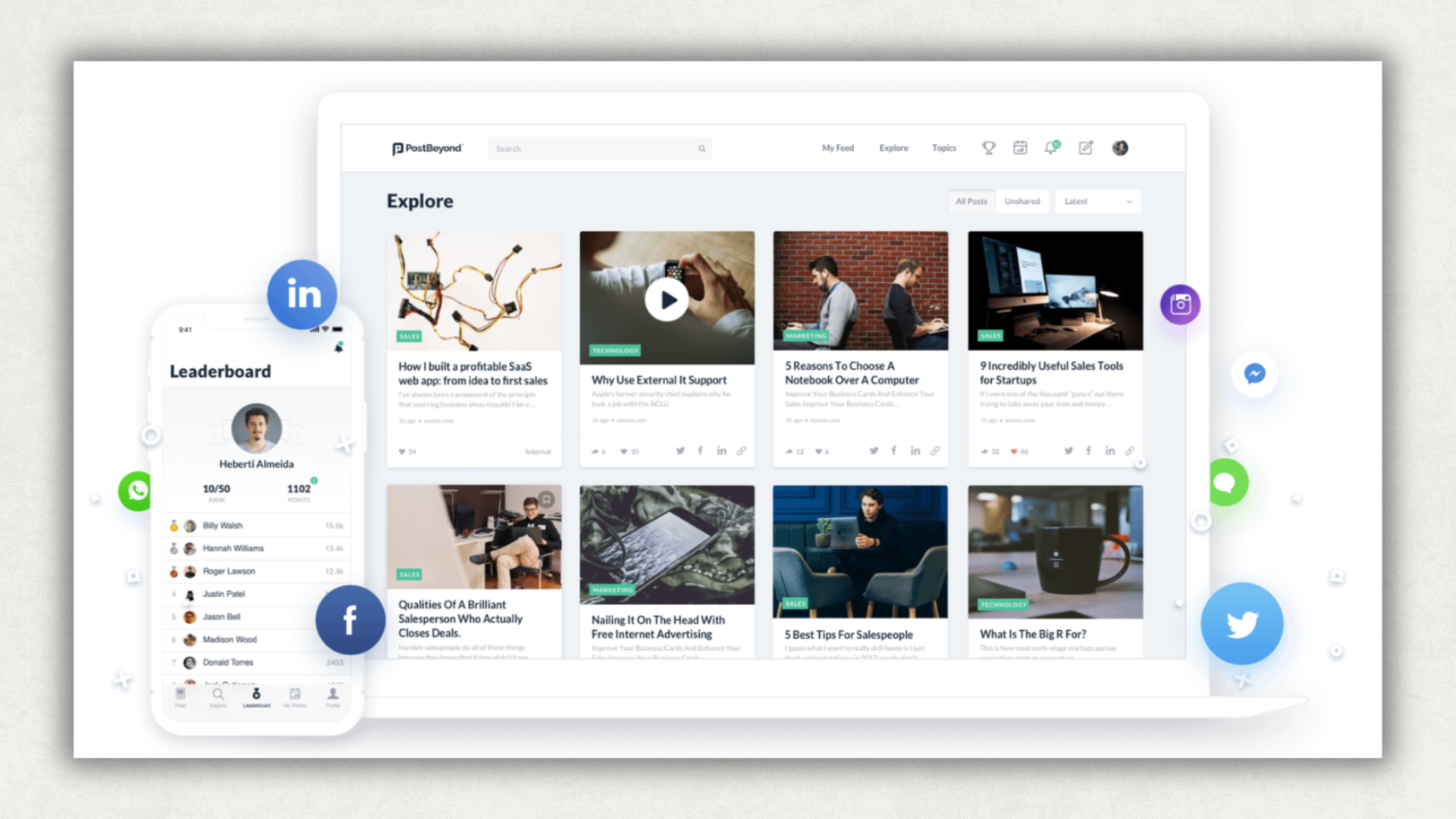
You get a central content library, per-employee dashboards showing individual sharing performance, scheduling, engagement tracking, ready-made post templates, AI caption generation (still in beta on their own pricing page), and a real-time compliance filter that flags or blocks specific words and phrases. That compliance layer is the reason regulated industries pick it, and it is the feature most often missing from cheaper tools.
Pricing is the clearest on this list. The Growth plan runs $1,125 per month for a minimum of 100 enrolled employees, which works out to roughly $11.25 per employee per month, with unlimited admin seats, single sign-on, analytics, gamification and dedicated support. Enterprise starts at 250+ employees on custom pricing. The trial gives you the full platform for 30 days with up to 30 employees.
.png)
The 100-employee floor is the catch. Below that headcount you are paying for seats you cannot fill.
2. Parliament by Hootsuite
Hootsuite Amplify has been renamed Parliament. If you are working from a comparison written before 2026, that is the same product under a new name, now positioned as part of Hootsuite's wider platform rather than a bolt-on.
Parliament distributes pre-approved content to employees, executives and subject-matter experts, pushes it through Slack and Microsoft Teams so people share without opening another tool, recommends content with AI, and reports on advocate activity segmented by team, geography and sharing behavior.
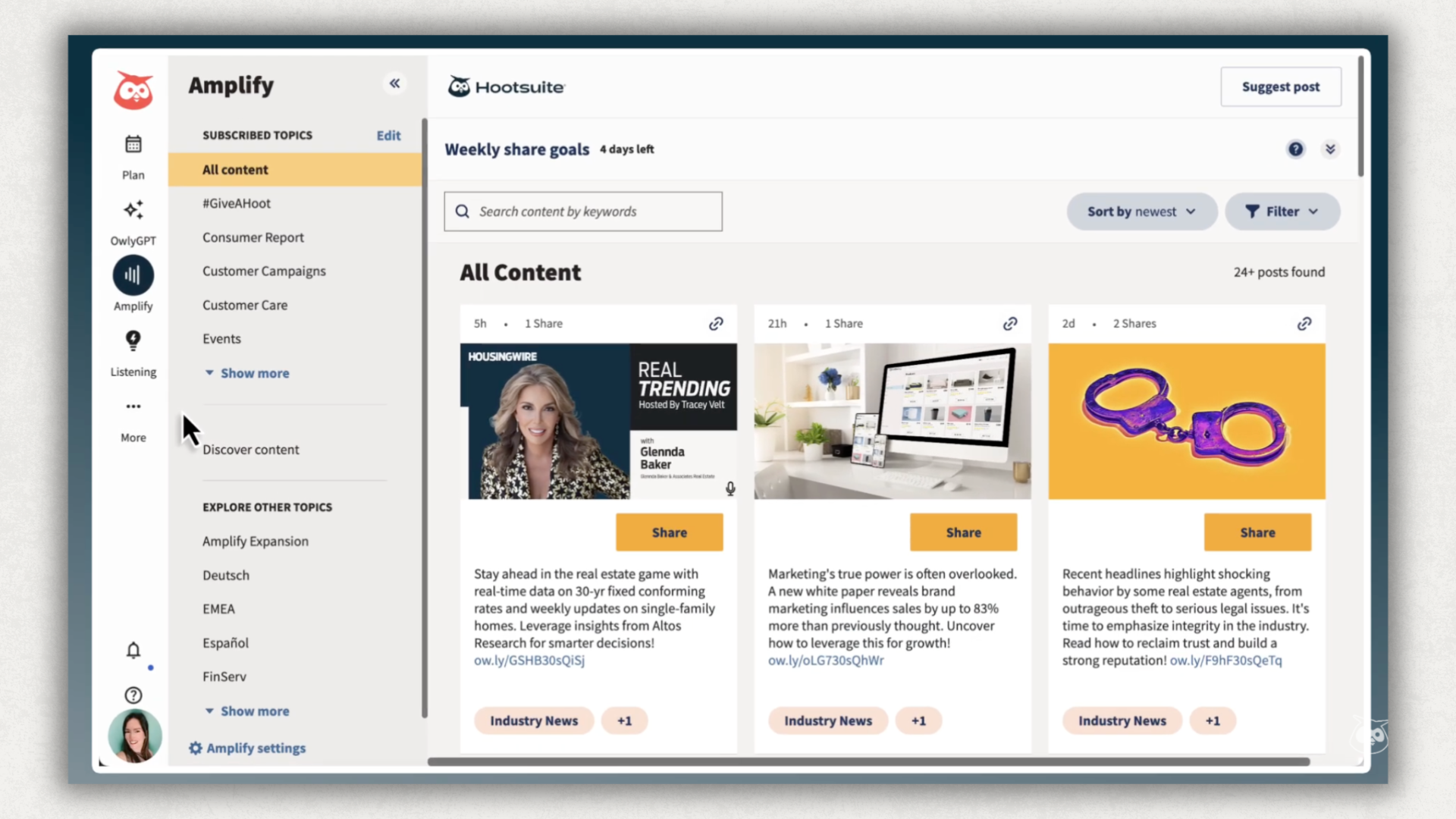
Parliament itself is demo-only, and it sits on top of a Hootsuite subscription. Hootsuite's published plans are charged per user: $99 per user per month for Standard with up to 10 social accounts, $199 for Professional with unlimited accounts, and $399 for Advanced, all billed annually, each with a 14-day trial and no card required. Add Parliament on top of that.
.png)
This is the option that makes sense when you already run Hootsuite. Buying into Hootsuite purely to get advocacy is an expensive route to a single feature, and Hootsuite remains a multi-platform scheduler rather than a LinkedIn specialist. We go into that trade-off in more detail in our Publer vs Hootsuite comparison.
3. Employee Advocacy by Sprout Social
Sprout's advocacy product started life as Bambu in 2015 and is now sold as Employee Advocacy by Sprout Social. Same lineage, current product, actively maintained.
It curates approved content into a simple feed employees can share from, with personalization so people can add their own commentary, feedback surveys, and gamification to keep participation from collapsing after month two.
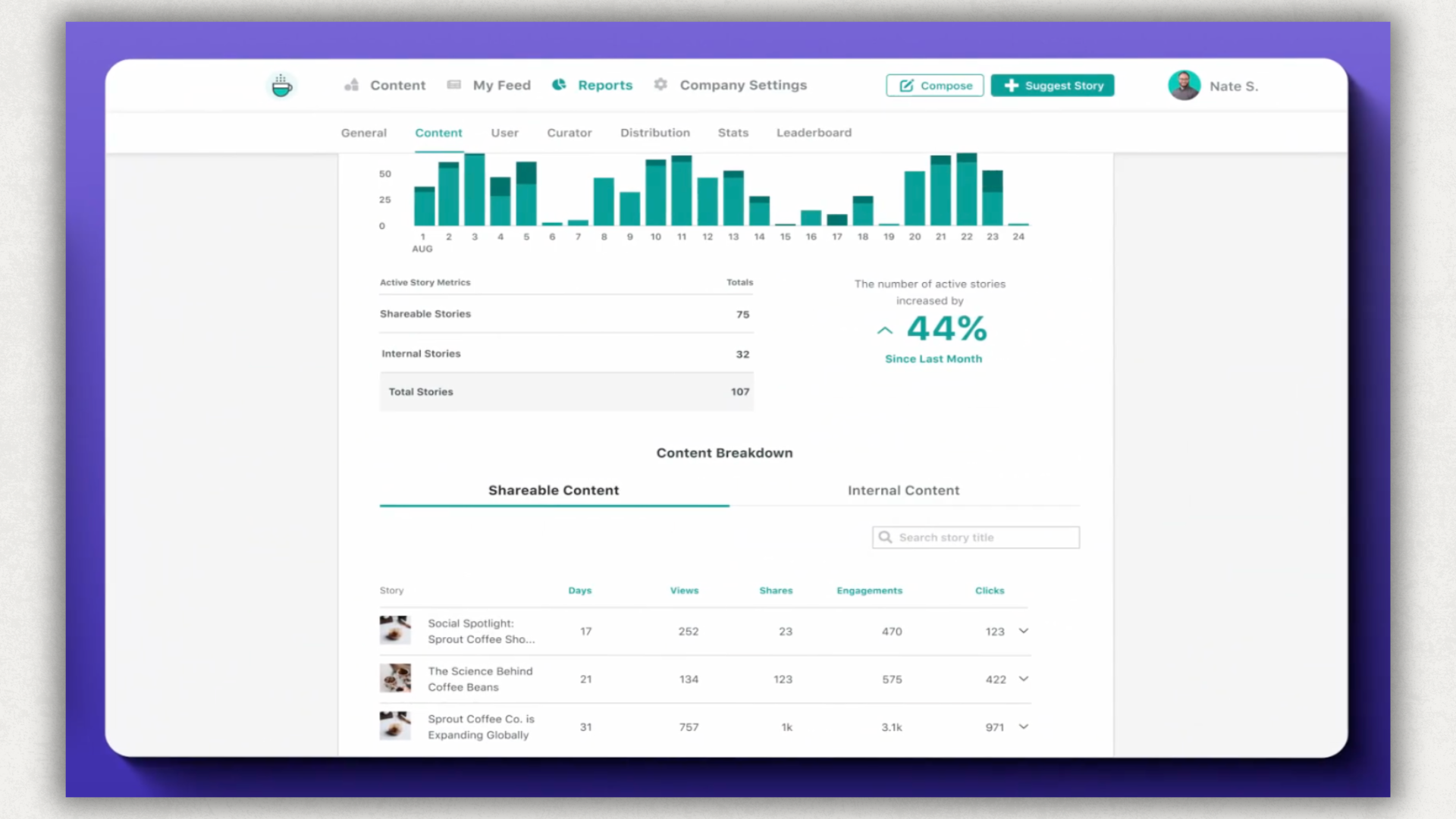
Like Parliament, it is an add-on rather than a standalone purchase, and its own price is not published. The underlying Sprout plans are: Essentials at $79 per seat per month billed annually with 5 social profiles, Standard at $199, Professional at $299 with unlimited profiles, and Advanced at $399. Sprout offers a 30-day trial with no card required, tied with PostBeyond for the longest here.
Per-seat pricing is the thing to model carefully. Advocacy programs want many participants, and a per-seat platform underneath a per-employee program adds up quickly. Sprout's analytics depth is genuinely strong, so this fits organizations that want reporting rigor and have the budget to match. If you are weighing Sprout more broadly, we cover it in our SproutSocial alternatives comparison.
4. Zoho Social
Zoho Social is the value pick, with one honest caveat: it is a social media management tool with collaboration features, not a dedicated advocacy platform.
There is no employee content library with approval workflows and per-advocate leaderboards. What you get is a publishing calendar, a bulk scheduler, repeat-post scheduling, monitoring for hashtags and keywords, LinkedIn lead-generation tracking, Canva integration, and role-based team collaboration where you assign permissions per person.
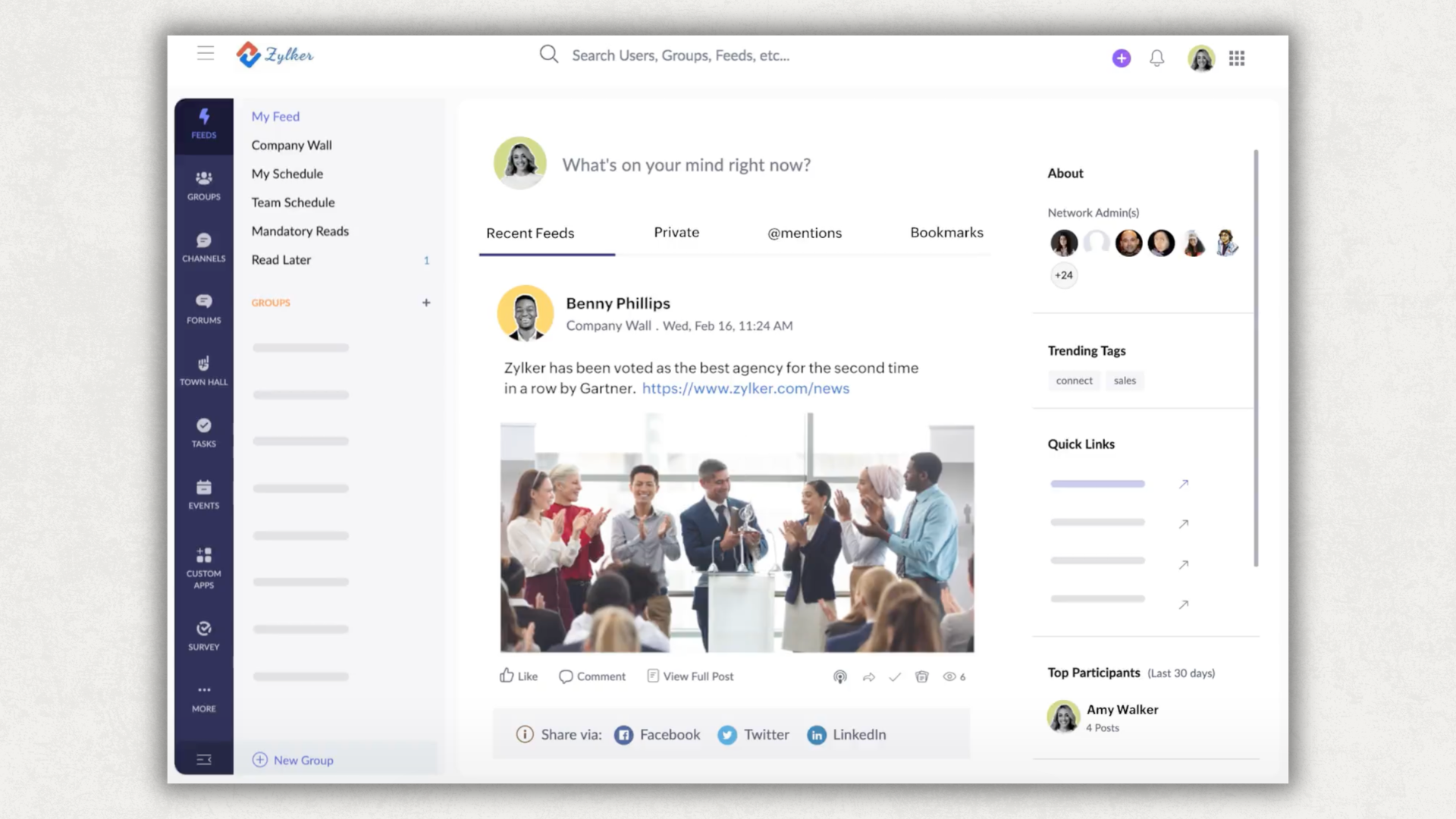
Zoho publishes Standard, Professional and Premium business tiers plus Agency and Agency Plus, with 33% off annual billing. The trial is 15 days with no card, and when it expires the account drops to a forever-free plan rather than locking you out. That free tier covers X, Instagram, Facebook, LinkedIn profiles and pages, and Google Business Profile.
.png)
Pick Zoho if your real problem is coordinated publishing on a budget and "advocacy" was a nice-to-have. If you need approval chains and per-employee reporting, this is not that tool.
5. AuthoredUp
AuthoredUp solves a different half of the problem, and it is worth being straight about which half.
We do not distribute company content to employee accounts. There is no advocacy content library, no approval workflow, no per-advocate leaderboard. If your requirement is "push this post to 400 employees on Thursday," one of the four tools above is your answer.
What AuthoredUp does is make the posts better before they go out, and show you what happened after.
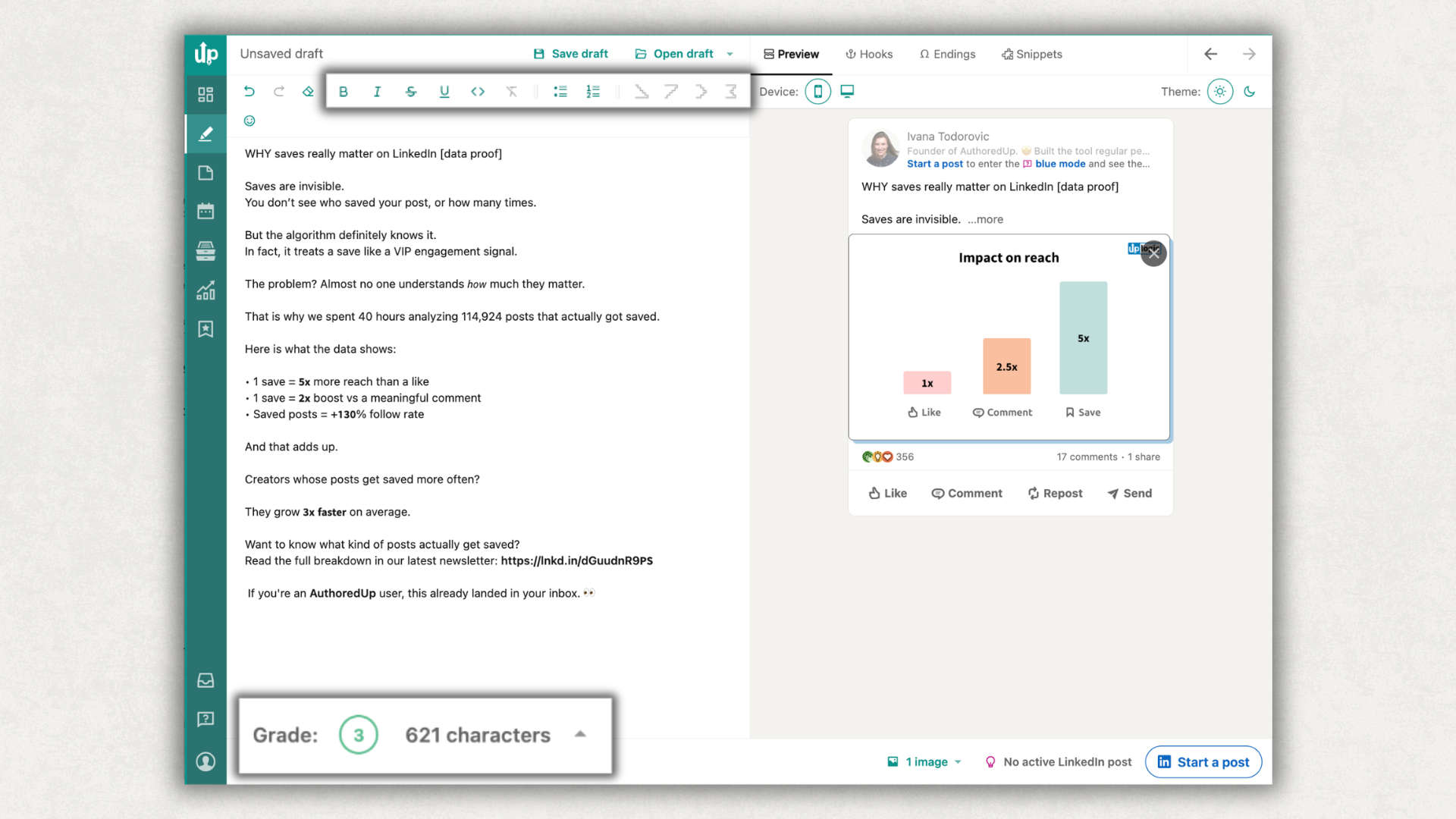
Writing happens in a Chrome extension inside LinkedIn itself, with formatting for bold, italics and bullets, a readability score, 300+ hooks and post endings, reusable snippets, and a preview showing exactly how a post renders on desktop and mobile before it publishes. Drafts are unlimited, and colleagues or clients can be added as collaborators on any draft.
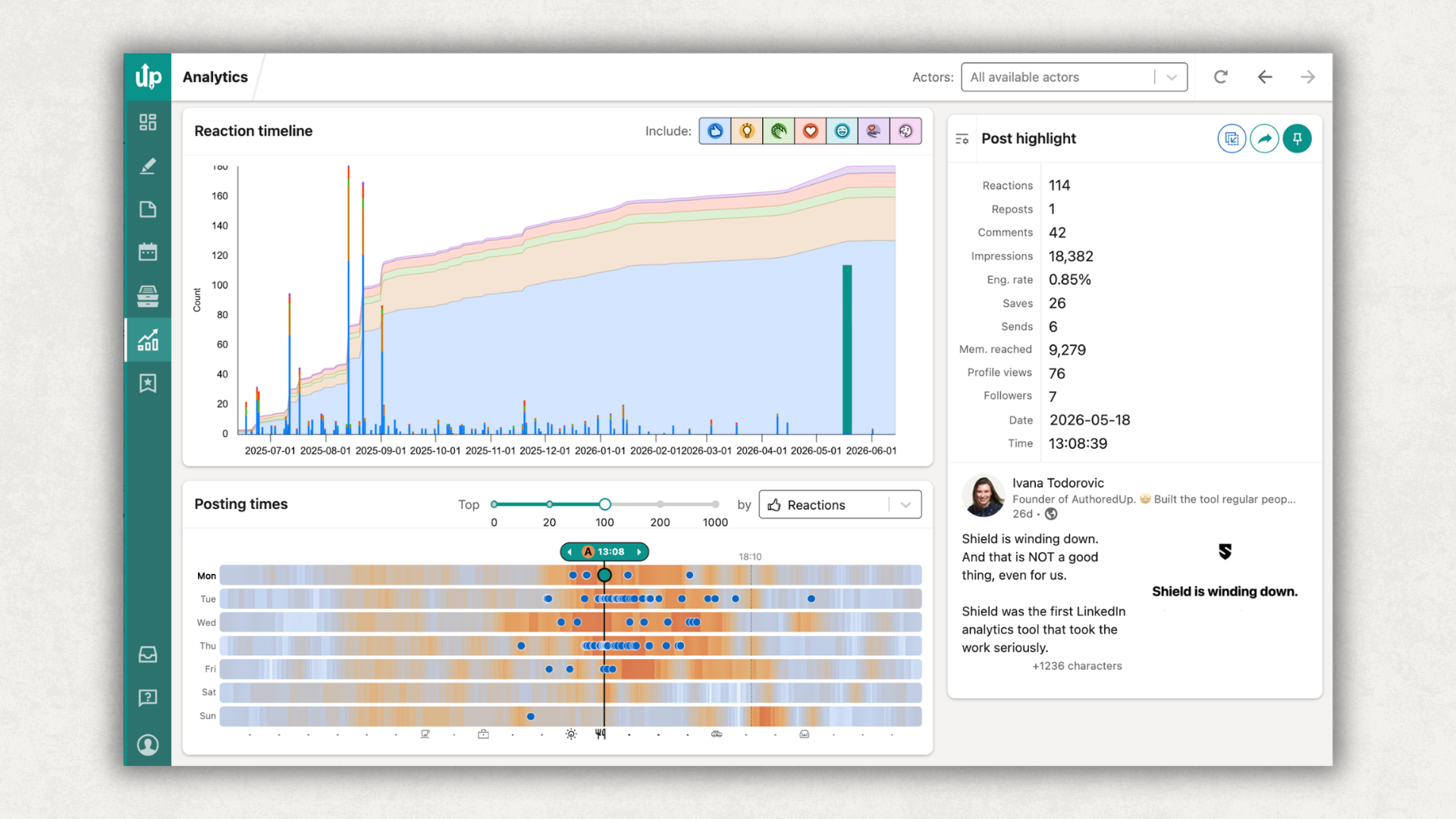
On the reporting side, team analytics roll up performance across everyone you manage, a shared post overview table shows every post published by the team and its company pages, and analytics go back years rather than starting the day you sign up, because you can import your LinkedIn archive export. Most tools can only show you what happened after you became a customer.
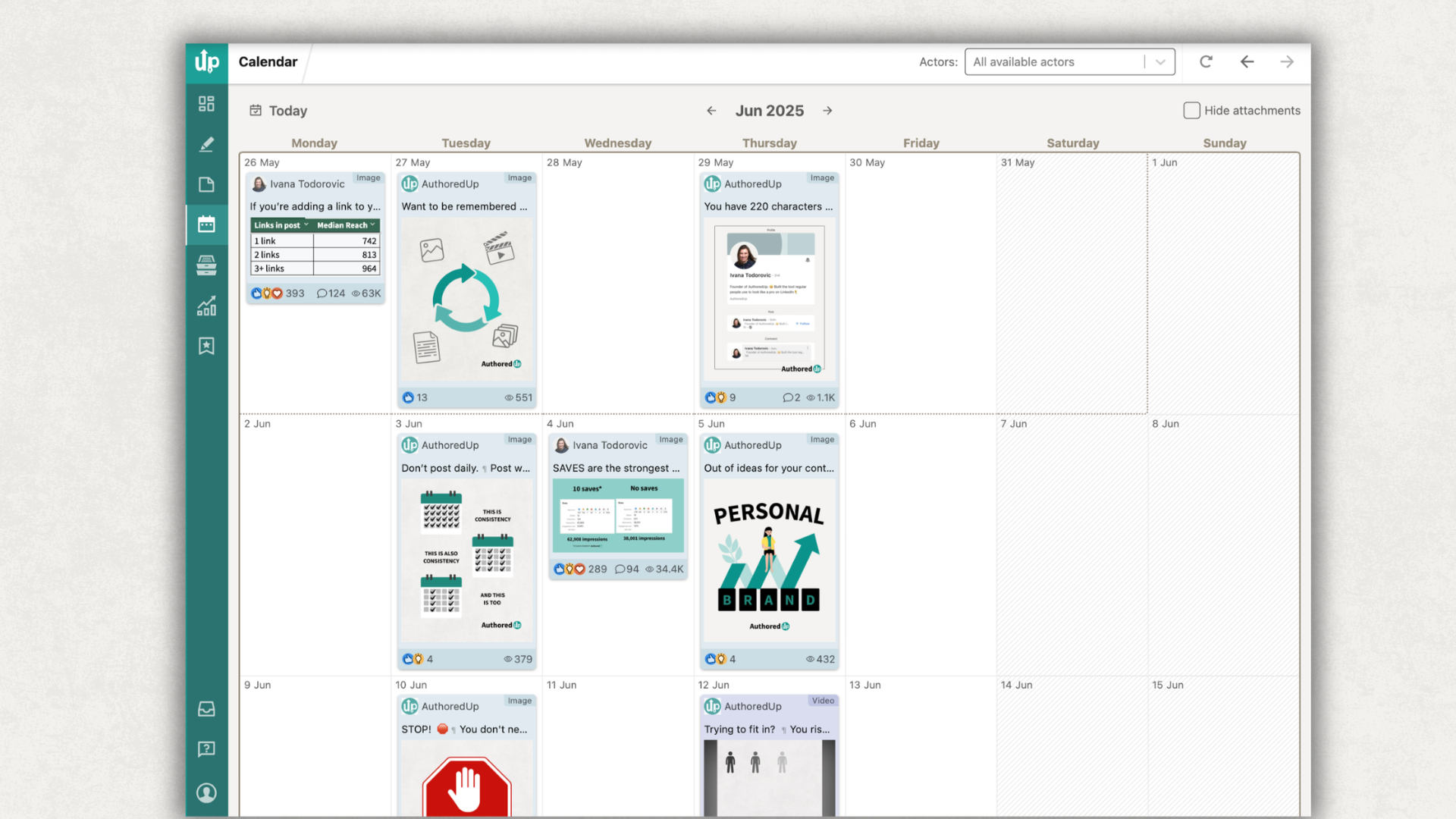
Company pages are included free and unlimited on every plan, which matters here: an advocacy program almost always runs a page alongside the employee accounts.
Individual is $19.95 per month, or $16.63 billed annually. Business is $14.95 per profile per month with a three-profile minimum, or $12.46 annually. Above ten profiles there is a custom plan. You can start without a card.
.png)
The honest limitation: scheduling and publishing need the Chrome extension. The web platform handles drafts, analytics and management, but the extension does the posting. Full tier detail is on our pricing page and broken down further in our plans explainer.
Which one fits your team
The decision comes down to headcount and what is actually broken.
If you are running a formal program with 100+ enrolled employees and need compliance controls, PostBeyond is the most direct SocialHP replacement, and the only dedicated advocacy platform here that will tell you the price before a sales call. Regulated industries should start there.
If Hootsuite is already your social stack, Parliament is the path of least resistance. If Sprout is already your stack, its advocacy add-on is the same logic, with better analytics and higher per-seat cost.
If the budget is small and the real need is organized publishing rather than a formal advocacy program, Zoho Social does the job and has a free tier to fall back on.
And if your program keeps stalling because the content going out is dull, the tool is not the bottleneck. Our data says the reach advantage of a personal profile over a company page is about 1.5 times, which is real but not enormous. It disappears entirely if employees are pushing out copy nobody wants to read. That is the case where a writing and analytics tool like AuthoredUp does more for the program than another distribution platform will.
For the wider field, including Oktopost, EveryoneSocial and others, see our employee advocacy tools comparison. If you are still building the program itself rather than shopping for software, start with LinkedIn employee advocacy and the content strategy behind an advocacy platform, then work through the 17 tips to master it.
Frequently asked questions
How much does SocialHP cost?
SocialHP publishes no pricing. Access starts with a demo booking or a no-credit-card signup, and you get a quote through their sales team. Of the five alternatives here, PostBeyond and AuthoredUp publish fixed dollar prices, and Zoho Social publishes its tiers with pricing set by region.
What is the best SocialHP alternative?
PostBeyond, for most teams replacing SocialHP directly. It covers the same job, publishes its pricing at $1,125 per month for 100 employees, and adds real-time compliance filtering. Below roughly 100 employees the economics stop working, and Zoho Social or a LinkedIn-specific tool becomes the better fit.
Is Hootsuite Amplify still available?
Yes, under a new name. Amplify is now called Parliament and is positioned as part of Hootsuite's wider platform. The advocacy capability carried over, with added analytics for segmenting advocate activity by team and geography.
Do employees really get more reach than a company page?
Yes, though less than advocacy marketing usually claims. In our analysis of 894,168 posts from July 2025 to June 2026, the median personal-profile post reached 1,006 people against 659 for the median company-page post, about 1.5 times. The engagement rate is actually slightly higher on company pages, 2.63% against 2.37%, so the advantage is distribution rather than better performance per viewer.
Are there free employee advocacy tools?
Not really, for dedicated advocacy platforms. Zoho Social has a forever-free tier after its 15-day trial, but it lacks approval workflows and per-advocate reporting. PostBeyond's 30-day trial covers up to 30 employees, which is enough to pilot a program before committing.
Can AuthoredUp replace SocialHP?
Only if what you need is better LinkedIn content and analytics rather than centralized distribution. You get no advocacy content library and no approval workflow. What you get is writing, formatting, previewing, scheduling and analytics for the profiles and company pages your team already runs. Many teams end up running both.
.svg)
.png)

.svg)
.png)
.png)