


.svg)

.png)
LinkedIn has more HR content than anyone could read, and most of it says the same six things about culture.
The 24 people below are the exception. They are practitioners, researchers and recruiters who post specifics: what they tried, what the numbers said, what they would not do again. Several publish the study behind the claim in the same post.
They are grouped by area, so you can skip to the part of HR you actually work in. Every profile was checked in 2026, so the titles here are the ones they hold now.
- HR Technology and Digital Transformation
- Talent Acquisition and Recruitment
- Leadership and Organizational Development
- DEI and Workplace Culture
- Career Development and Coaching
HR Technology and Digital Transformation
The people building and studying the systems HR runs on. Worth reading before you buy anything.
Josh Bersin
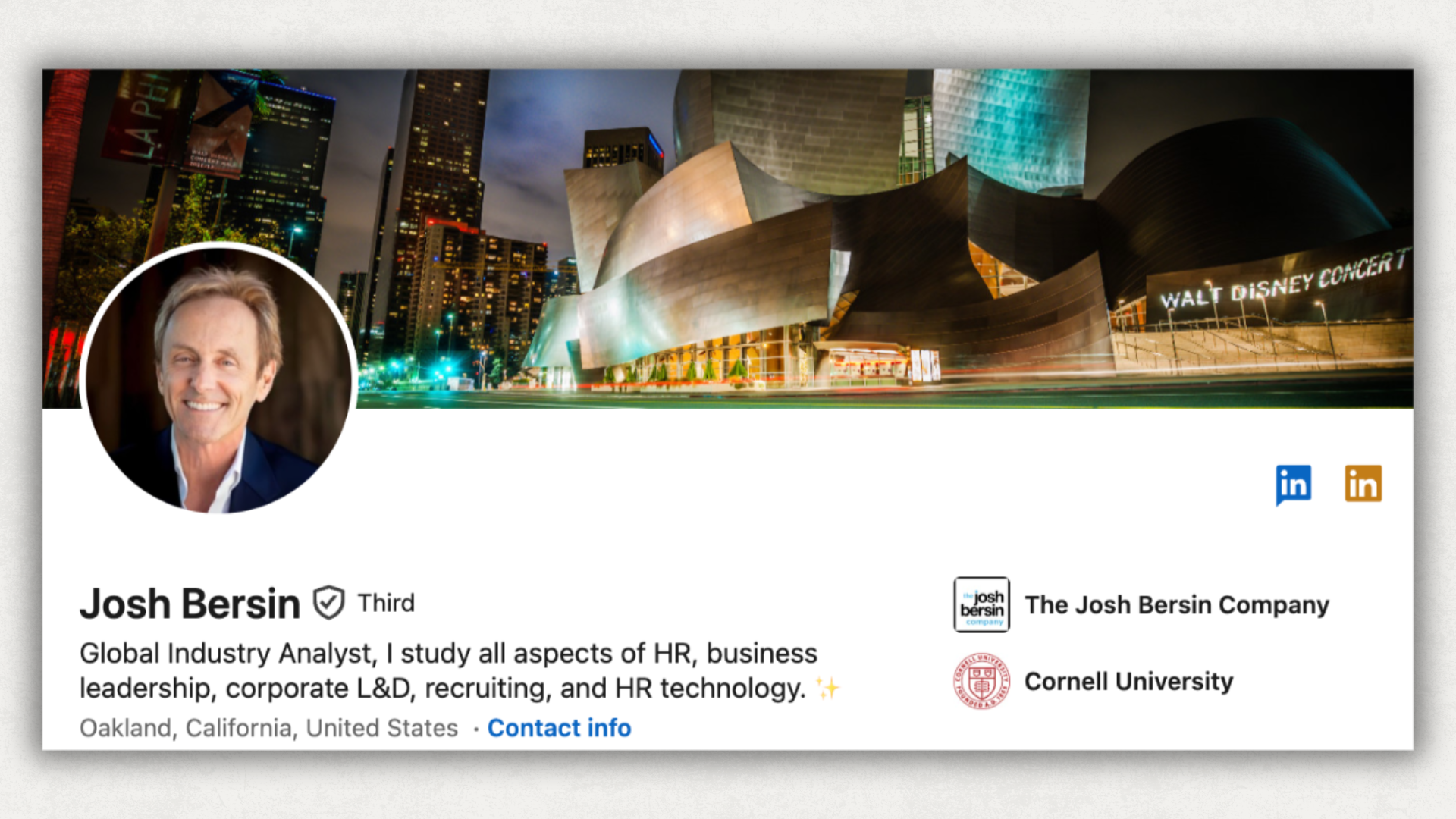
Josh Bersin is a global industry analyst covering HR, business leadership, corporate L&D, recruiting and HR technology. He runs the Josh Bersin Company and its academy for HR professionals.
Why follow Josh?
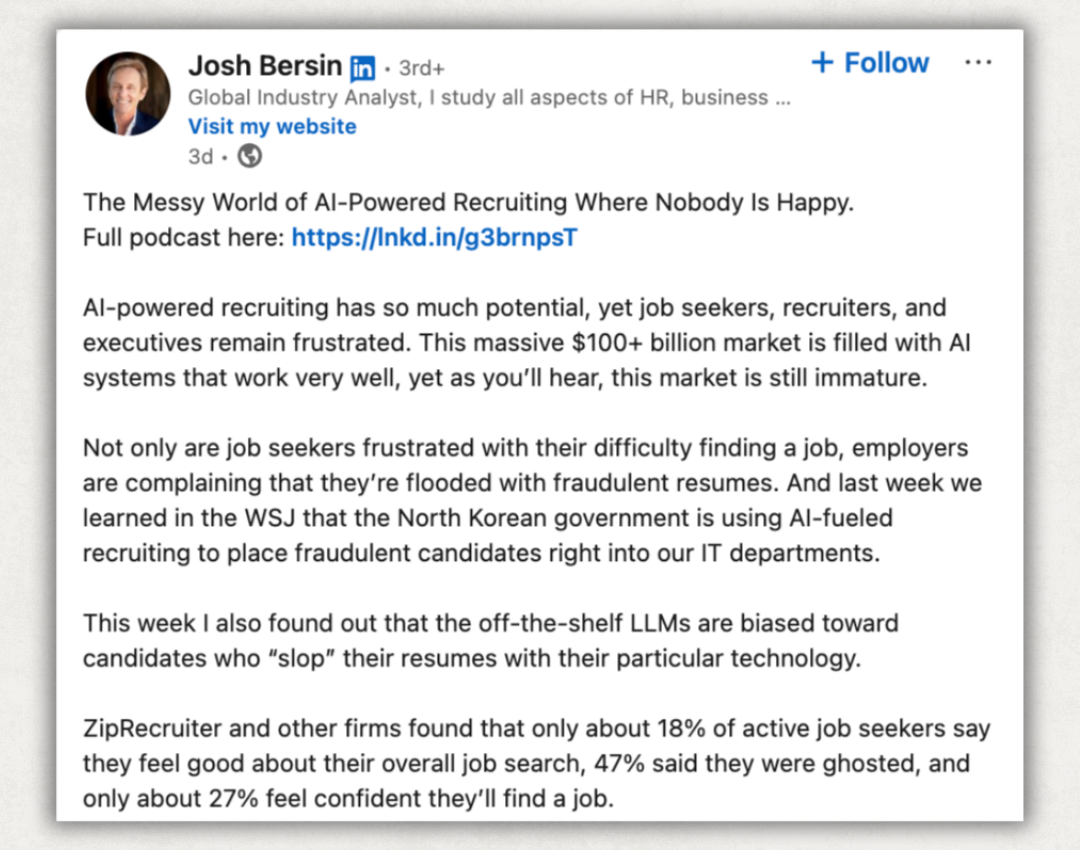
- His podcast on AI recruiting is called The Messy World of AI-Powered Recruiting Where Nobody Is Happy, which is a fair summary of a hundred-billion-dollar market where the technology works and everyone involved is still unhappy.
- He surfaces things that never appear in vendor material, like the North Korean operation using AI-assisted recruiting to place fraudulent candidates directly into American IT departments.
- When he found that off-the-shelf language models favour resumes padded with keywords, he published it. An analyst funded by the vendors would not have.
Ben Eubanks
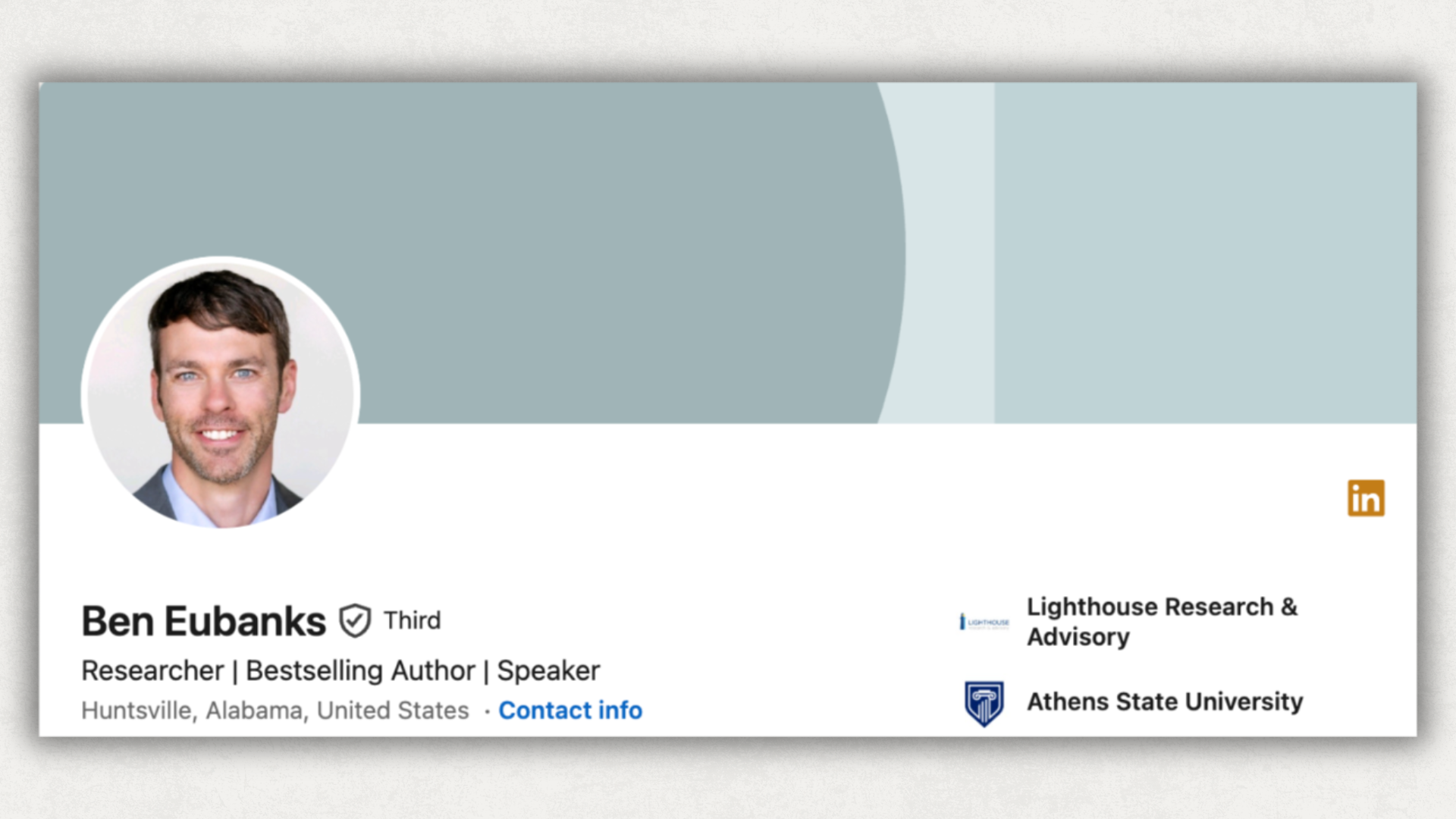
Ben Eubanks is a researcher, bestselling author and speaker, and Chief Research Officer at Lighthouse Research & Advisory. He wrote Artificial Intelligence for HR and Talent Scarcity.
Why follow Ben?
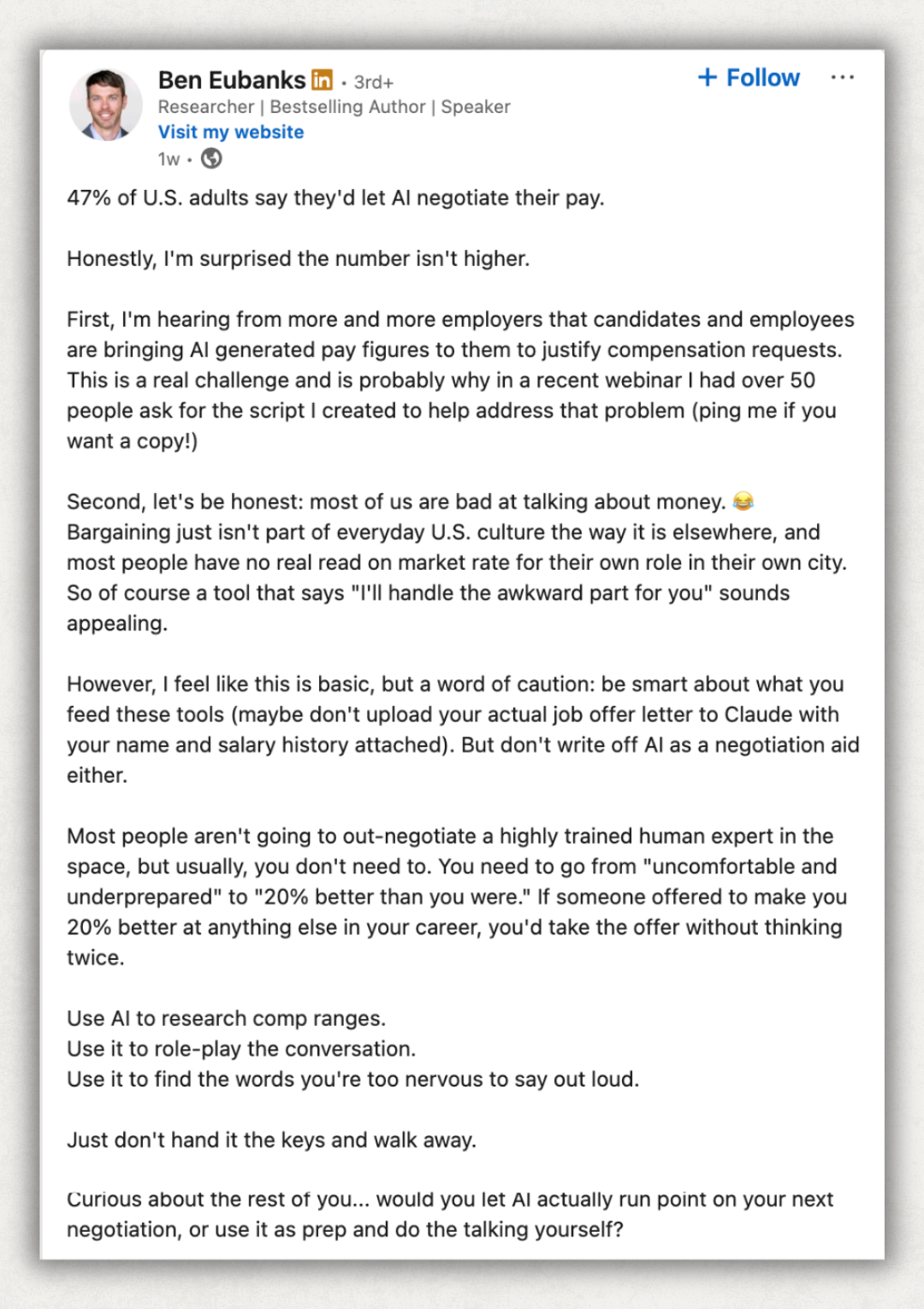
- He has been tracking Google's attempt to buy Spirit Airlines' data out of bankruptcy, which includes employee emails, Teams messages and calendars, to train AI models.
- The sourcing is always attached. That story arrived with the Reuters report and the flight attendants' union objection, rather than as a summary of somebody else's summary.
- He runs the studies himself, so the numbers in his posts are usually his own rather than a statistic doing the rounds.
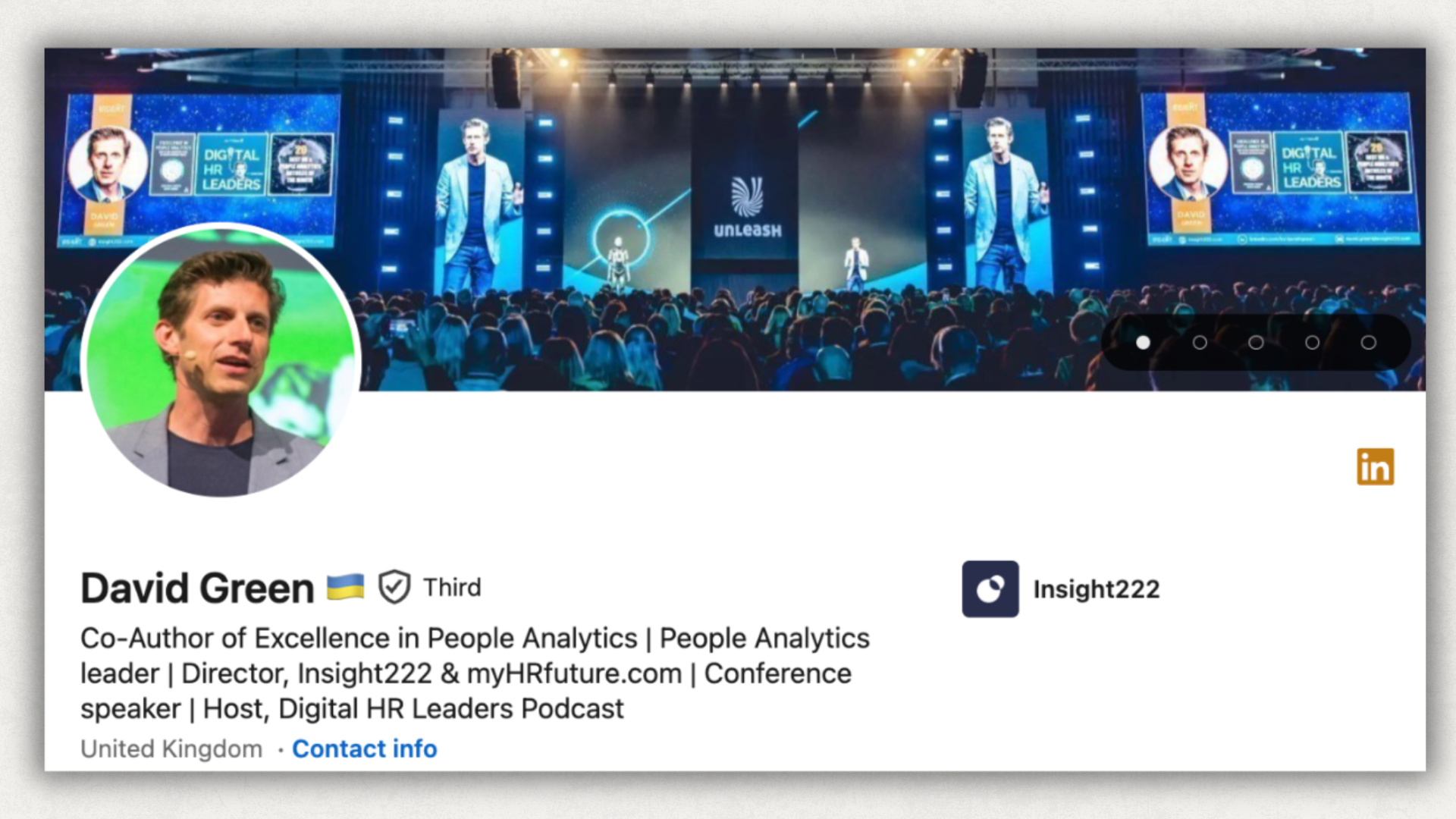
David Green
David Green is Director at Insight222 and myHRfuture.com, co-author of Excellence in People Analytics, and host of the Digital HR Leaders podcast.
People analytics is the part of HR most likely to be oversold, and his work is a good corrective. Academic research on the subject makes the same point: the returns come from analysing relationships and networks, not from dashboards of individual attributes.
Why follow David?
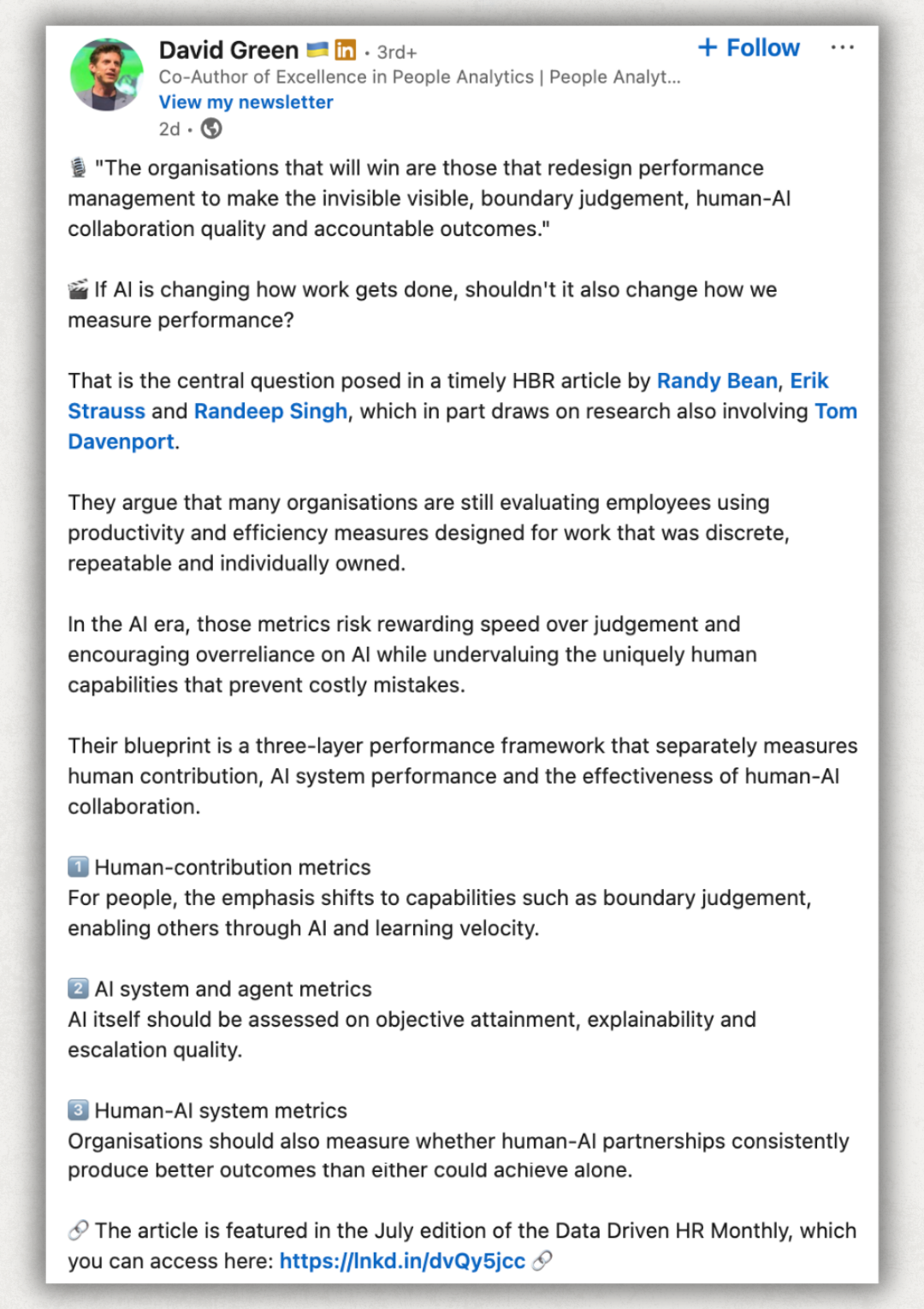
- He works through research instead of reacting to it. A recent post took BCG's finding on distributed de-skilling, the slow loss of critical capability once everyone leans on AI.
- His reading of that finding is that managing it is a source of advantage rather than a risk exercise, which is a more useful frame than most AI commentary manages.
- The podcast gets him long conversations with people actually running people analytics functions, and they are more candid than the conference version of the same story.
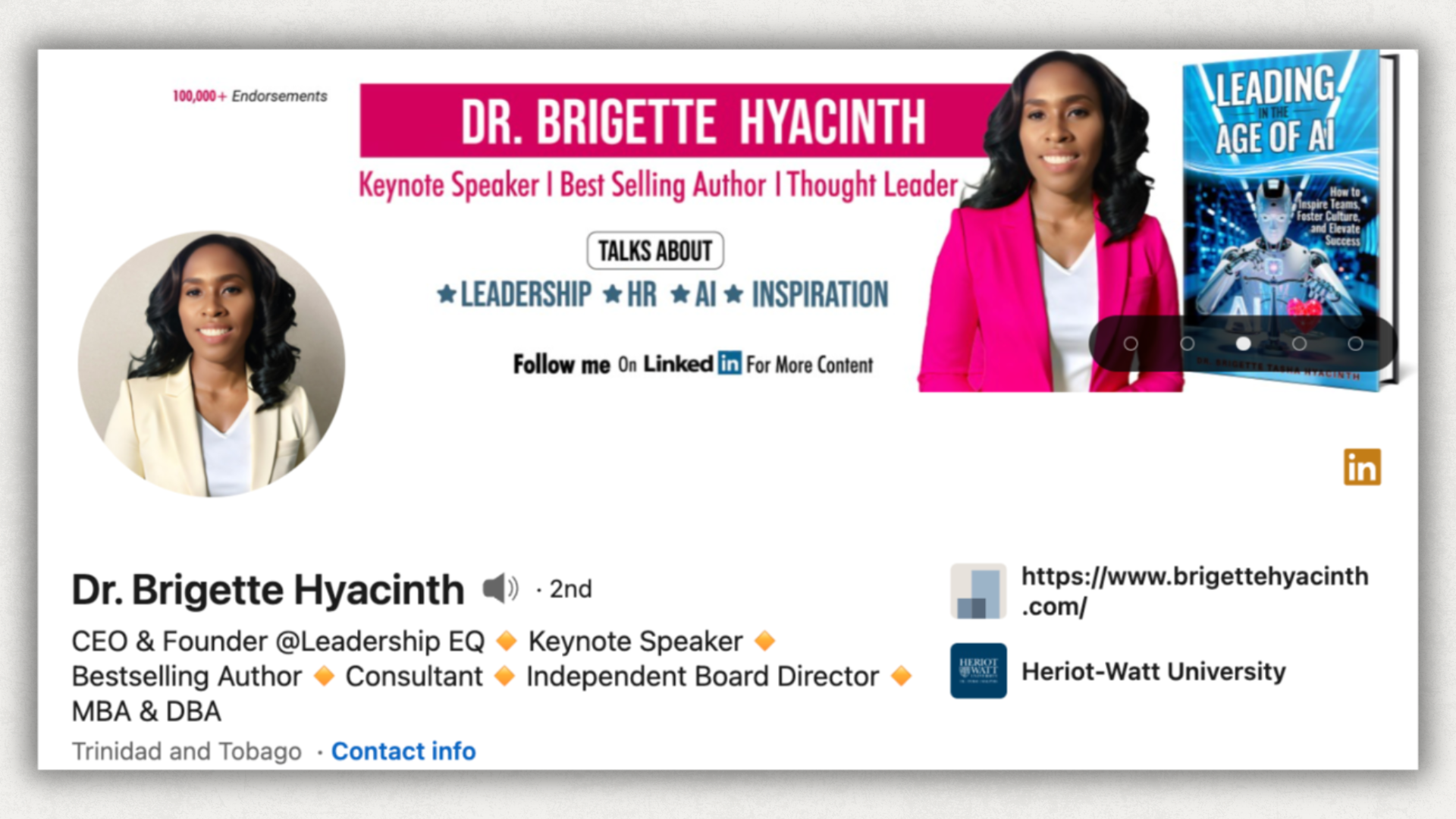
Dr. Brigette Hyacinth
Dr. Brigette Hyacinth is founder and CEO of Leadership EQ, an international keynote speaker, bestselling author and independent board director. She holds an MBA and a DBA.
Why follow Brigette?
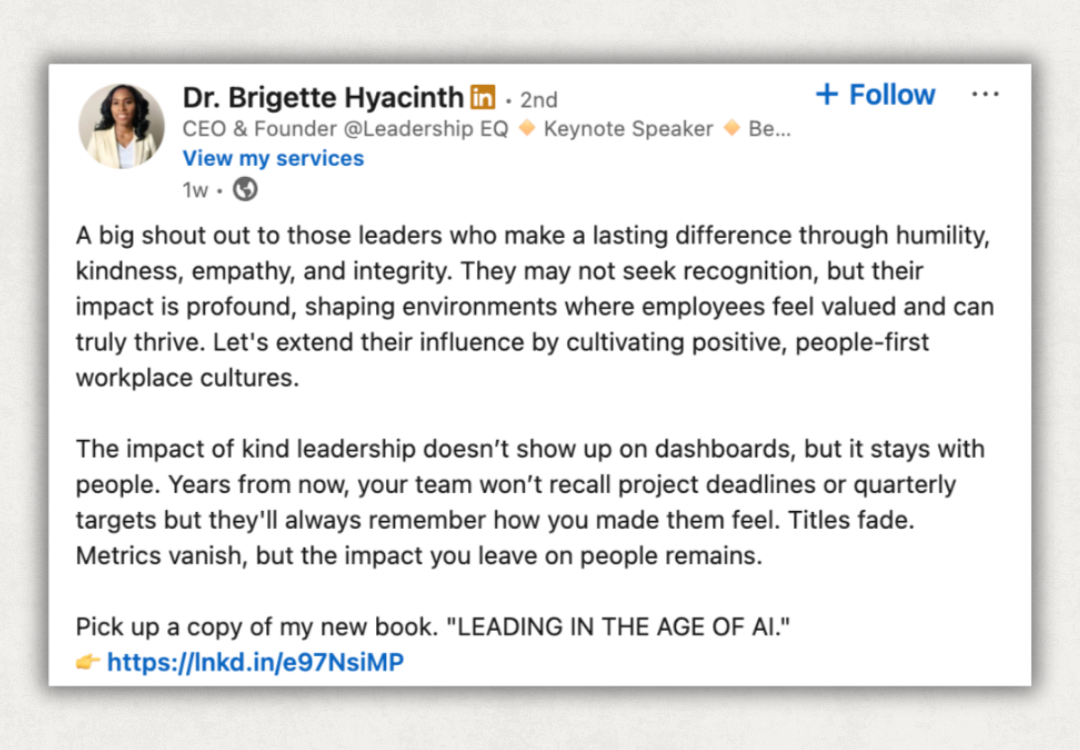
- Her argument, made patiently and often, is that kindness and accountability are the same job rather than opposite ends of a dial.
- She wrote Leading in the Age of AI, and the posts test that idea against automation: what happens to people when leaders treat pressure as a reason to stop listening.
- Short posts, plainly argued, easy to disagree with. The comment sections underneath are frequently worth more than the post.
Talent Acquisition and Recruitment
Recruiters who publish their methods. Useful whether you are hiring or being hired.
Hiring is one of the least evidence-based things companies do: most employers still cannot say whether their hiring practices produce better employees. The people below are unusually willing to show their working.
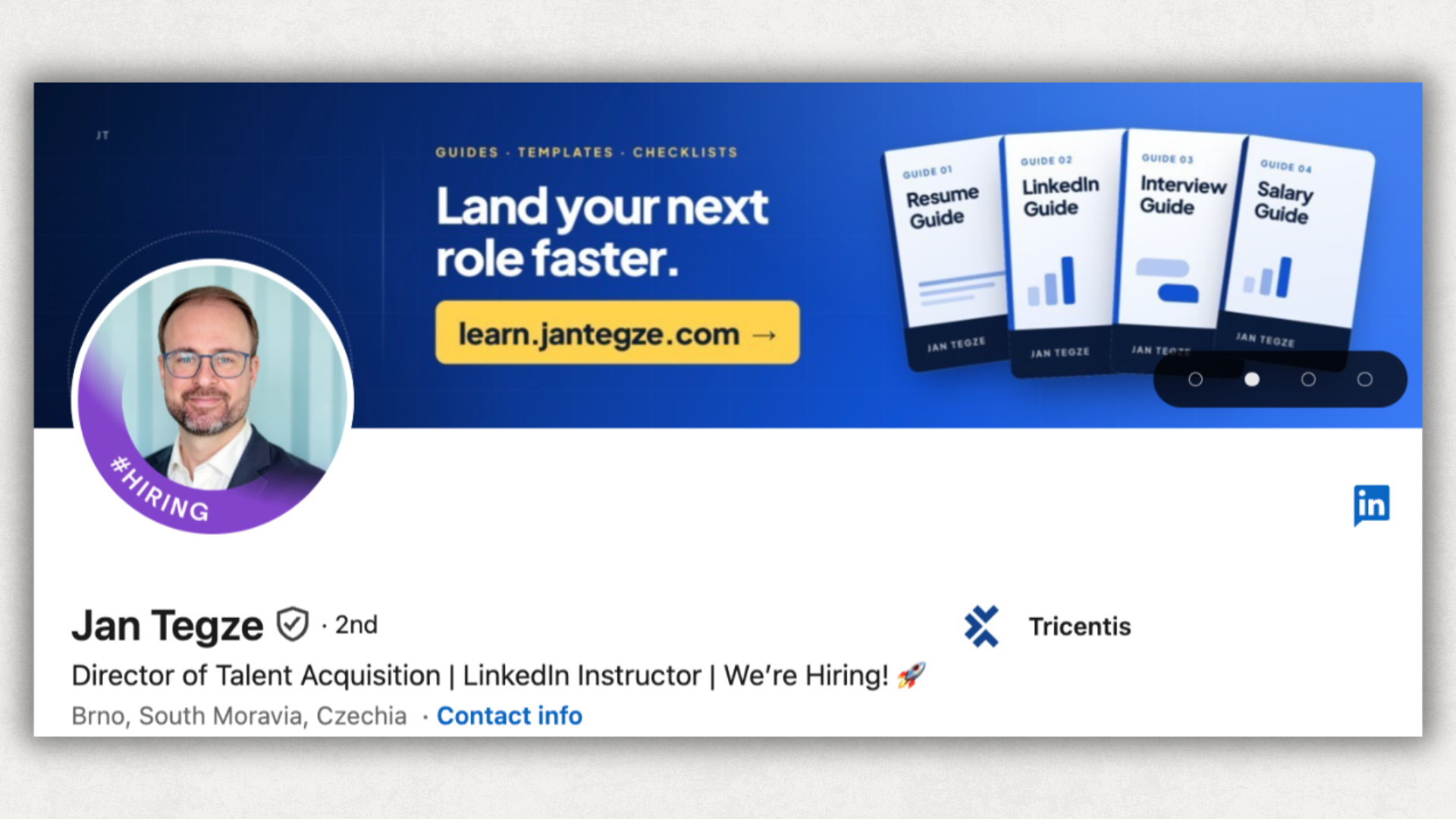
Jan Tegze
Jan Tegze is a Director of Talent Acquisition, LinkedIn instructor, and author of the bestseller Full Stack Recruiter.
Why follow Jan?
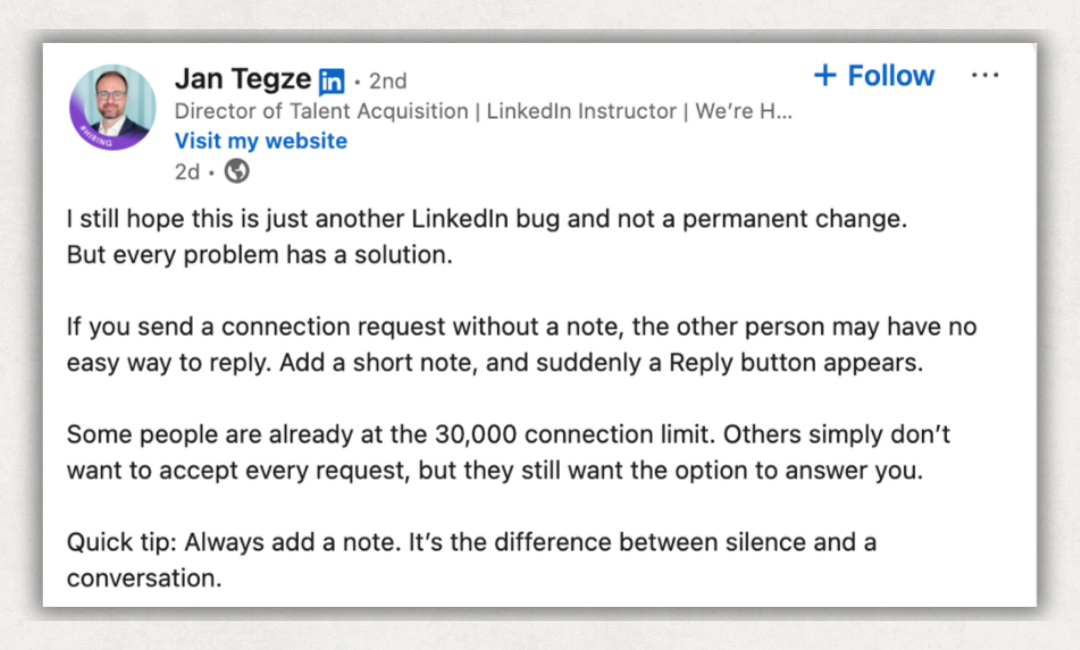
- He collects his own guides into one post when a pattern repeats, most recently the five job-search problems he kept running into through 2026.
- The titles tell you he is not writing for beginners: how to find roles before they reach the big job boards, why good candidates stay invisible on LinkedIn.
- Full Stack Recruiter is still a reference for sourcing technique, and he keeps publishing the updates rather than pointing back at the book.
Amy Miller
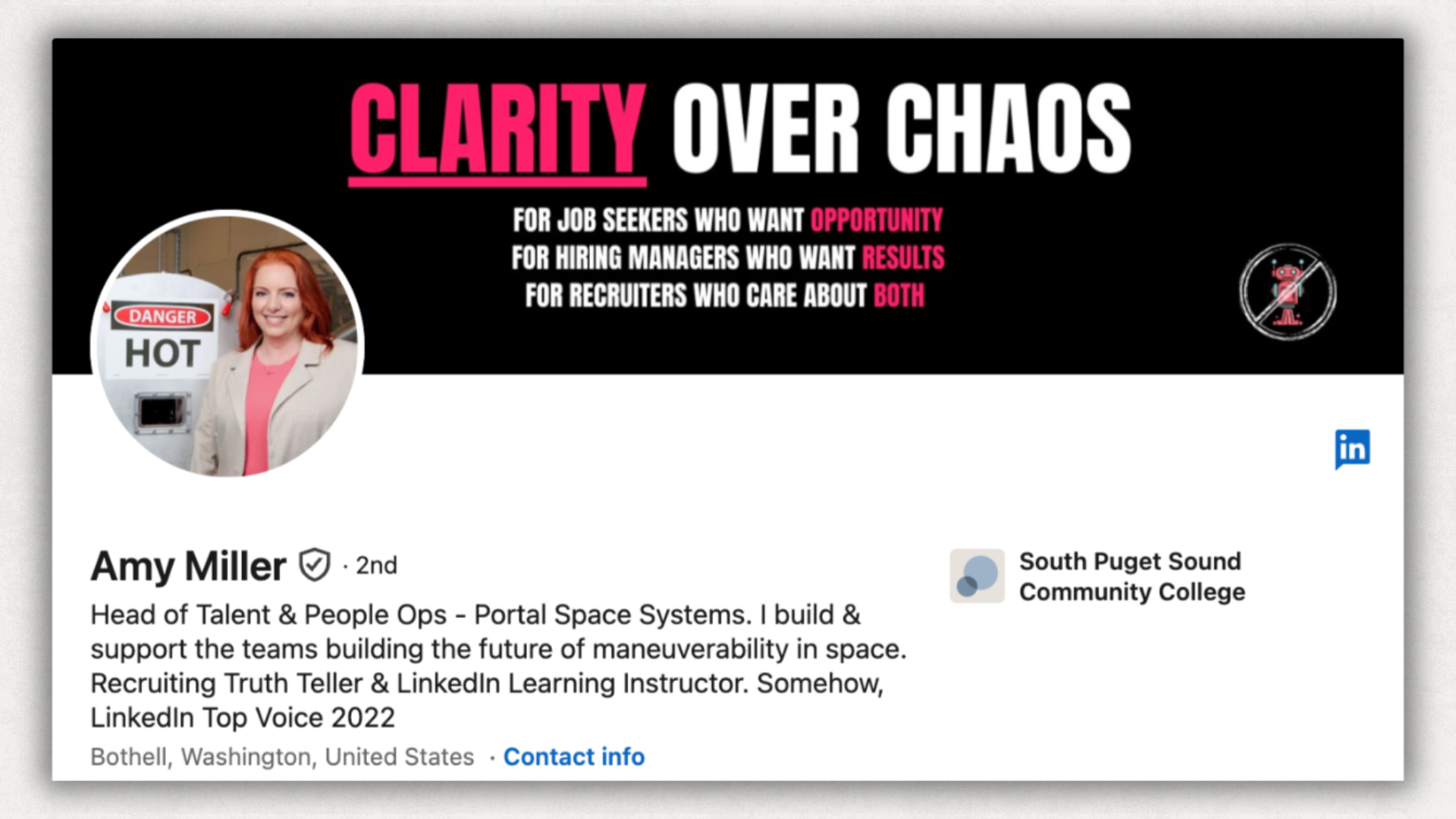
Amy Miller is Head of Talent & People Ops at Portal Space Systems, and was previously a senior recruiter at Amazon. She is a LinkedIn Learning instructor and was named a LinkedIn Top Voice in 2022.
Why follow Amy?
- She posts hiring news the way it actually arrives. The announcement that her company had signed a Falcon 9 launch contract came bundled with a reminder that they are hiring.
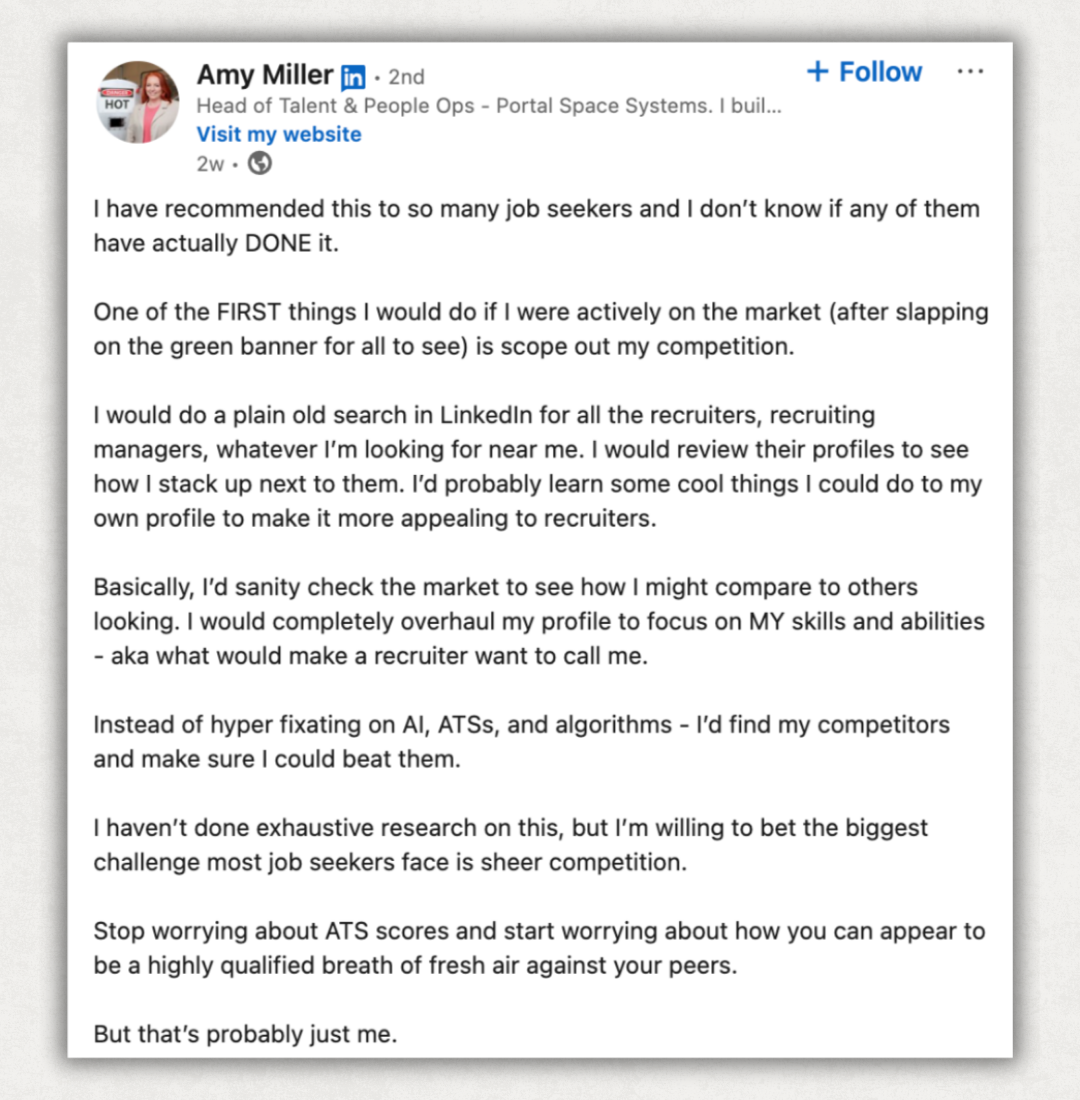
- Recruiting truth teller is her own description of the job, and it means she explains what recruiters are really doing rather than what the process claims they do.
- Two decades across very different industries, currently staffing a space company, which gives her a stranger hiring problem than most people writing about hiring.
Anna Chernyshova
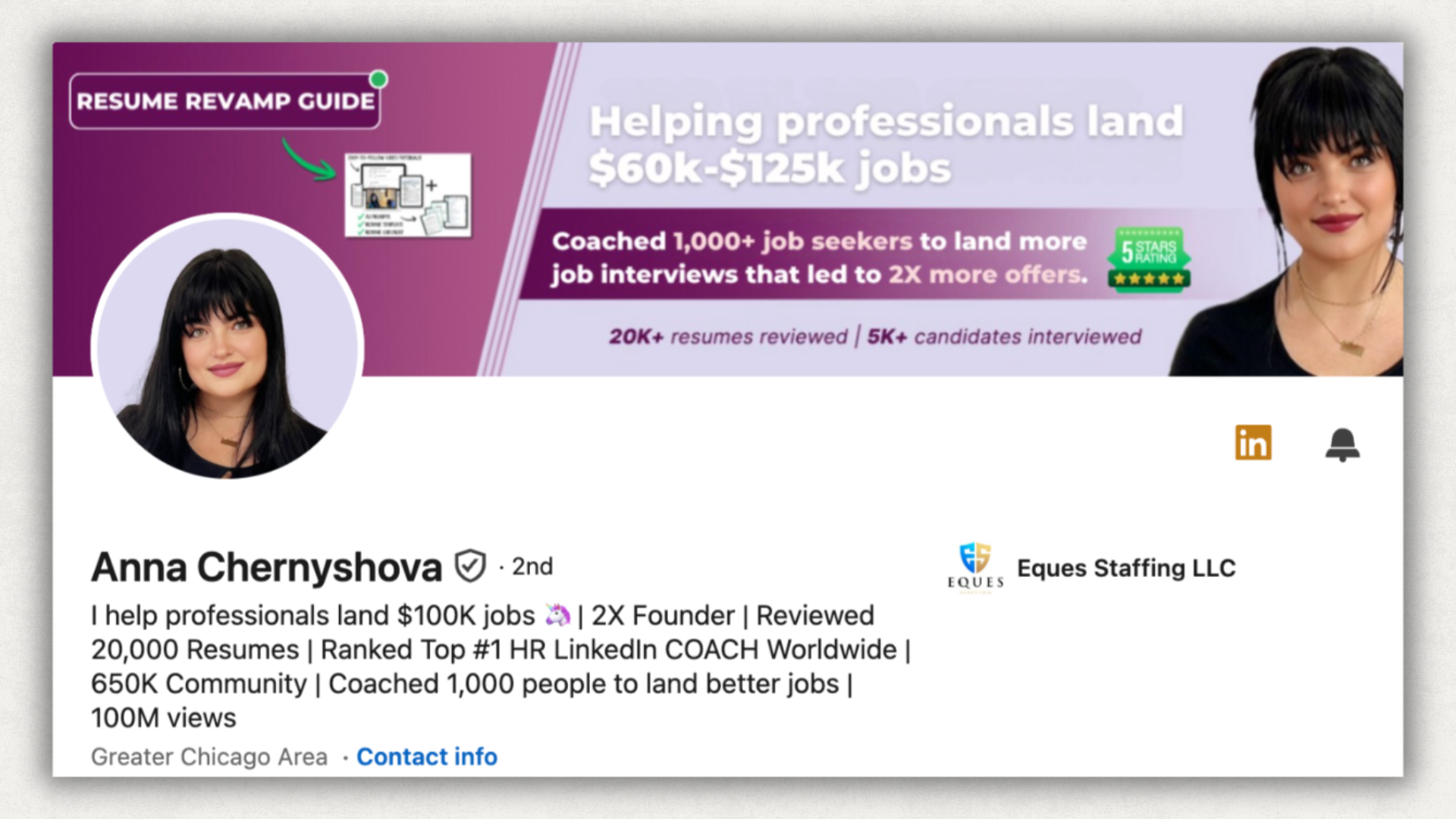
Anna Chernyshova is a career coach and two-time founder who has reviewed more than 20,000 resumes and built a community of around 650,000 followers.
Why follow Anna?
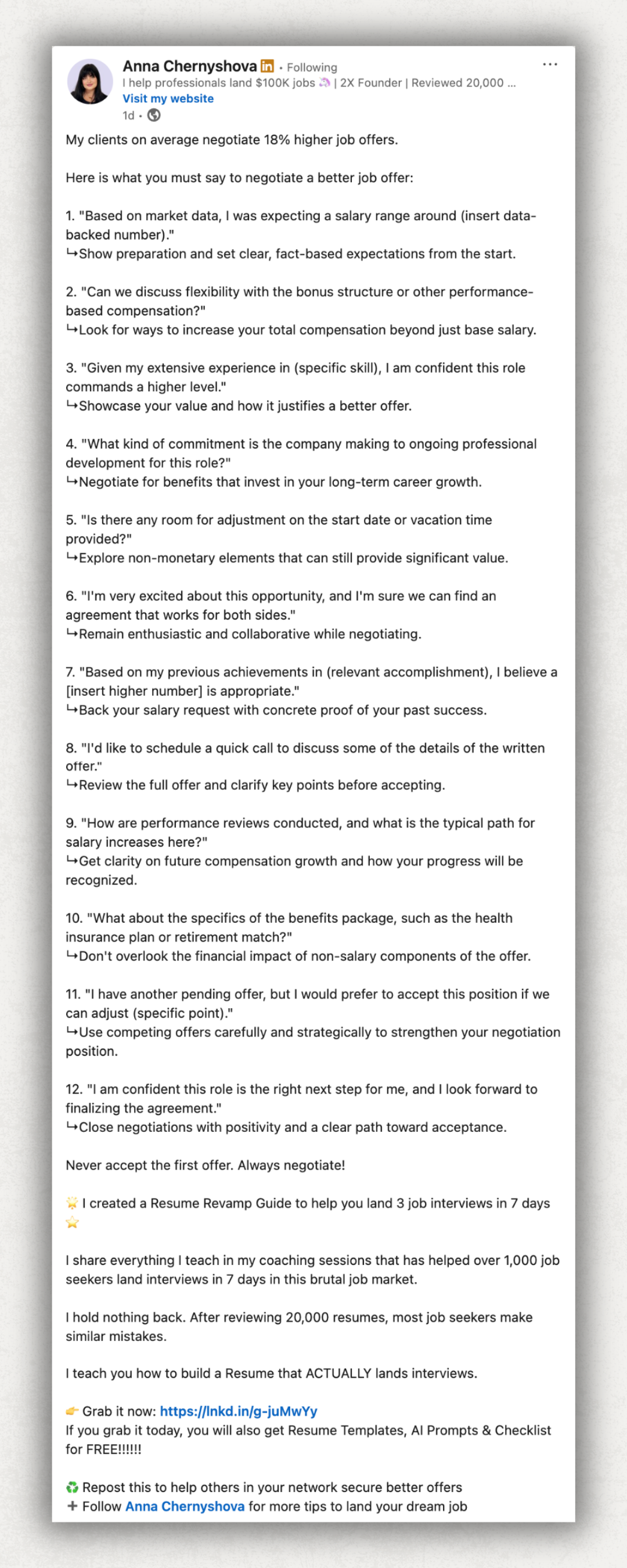
- She publishes the actual sentences. Her negotiation posts give you the wording, starting with a market-data range rather than a number you are hoping for.
- Her claim is that clients average eighteen percent higher offers, and the advice is specific enough that you can judge whether it is doing that work.
- Twenty thousand resumes shows in how quickly she names the one thing holding a particular application back.
Joel Lalgee
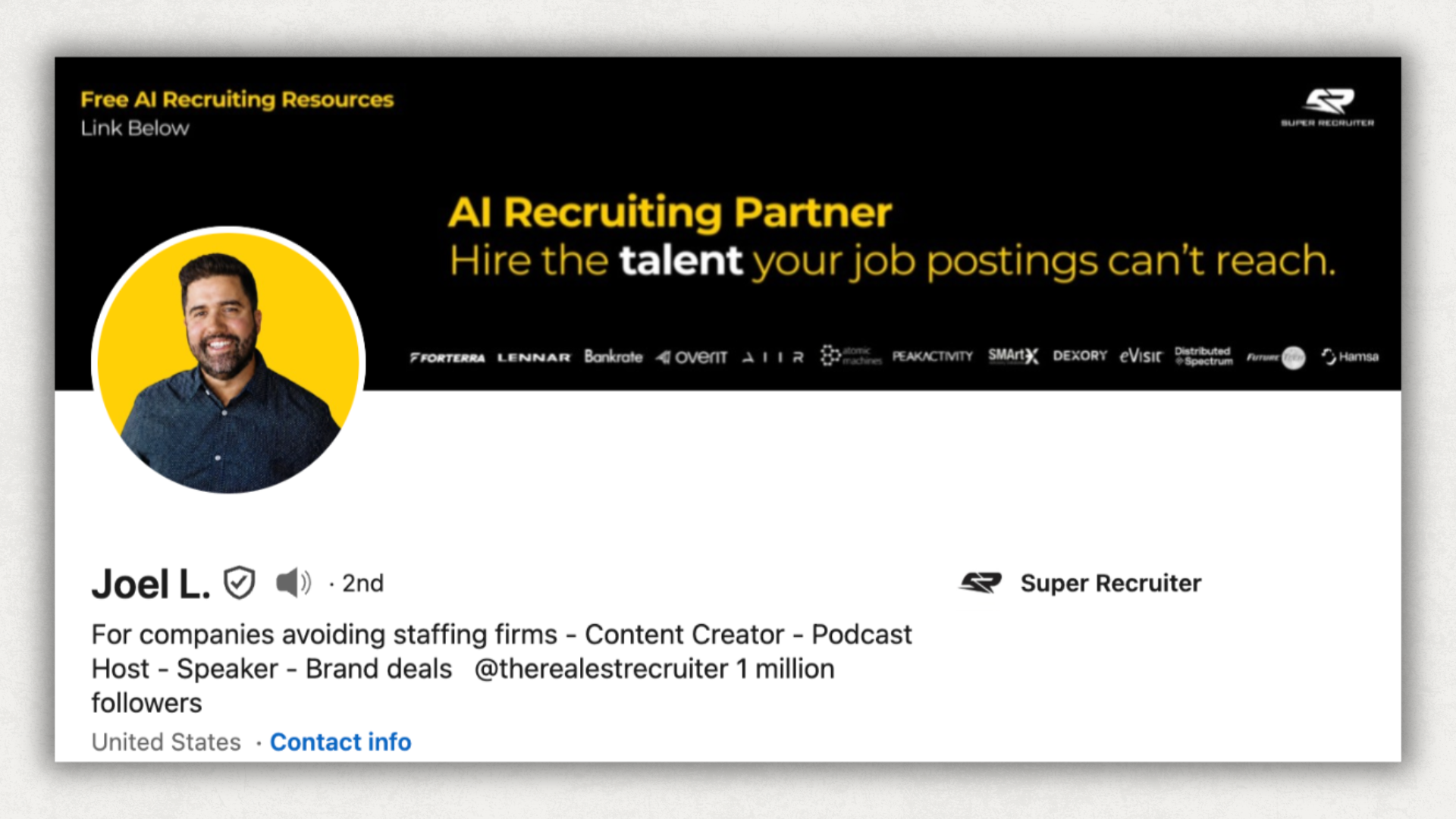
Joel Lalgee is known as The Realest Recruiter. He is a content creator, podcast host and speaker with around a million followers, working with companies that hire without staffing firms.
Why follow Joel?
- He is funniest about the contradictions recruiters live inside, like the manager asking why a role is still open and then asking whether the ninety-thousand candidate would take seventy.
- The jokes carry an argument about how hiring goes wrong, which is why practitioners share them rather than merely liking them.
- A million followers, and he still posts about the unglamorous middle of the process instead of drifting into general career-influencer advice.

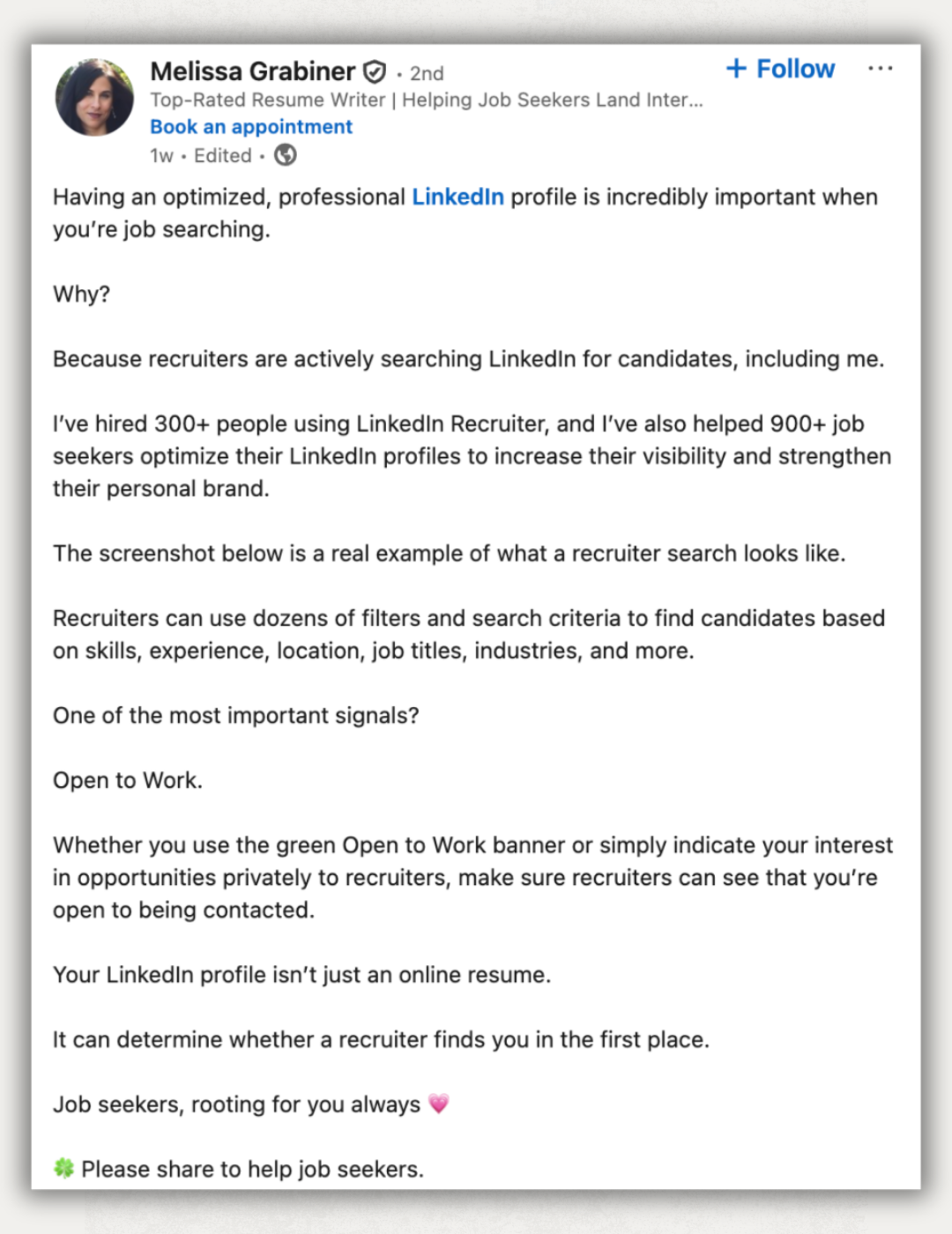
Melissa Grabiner
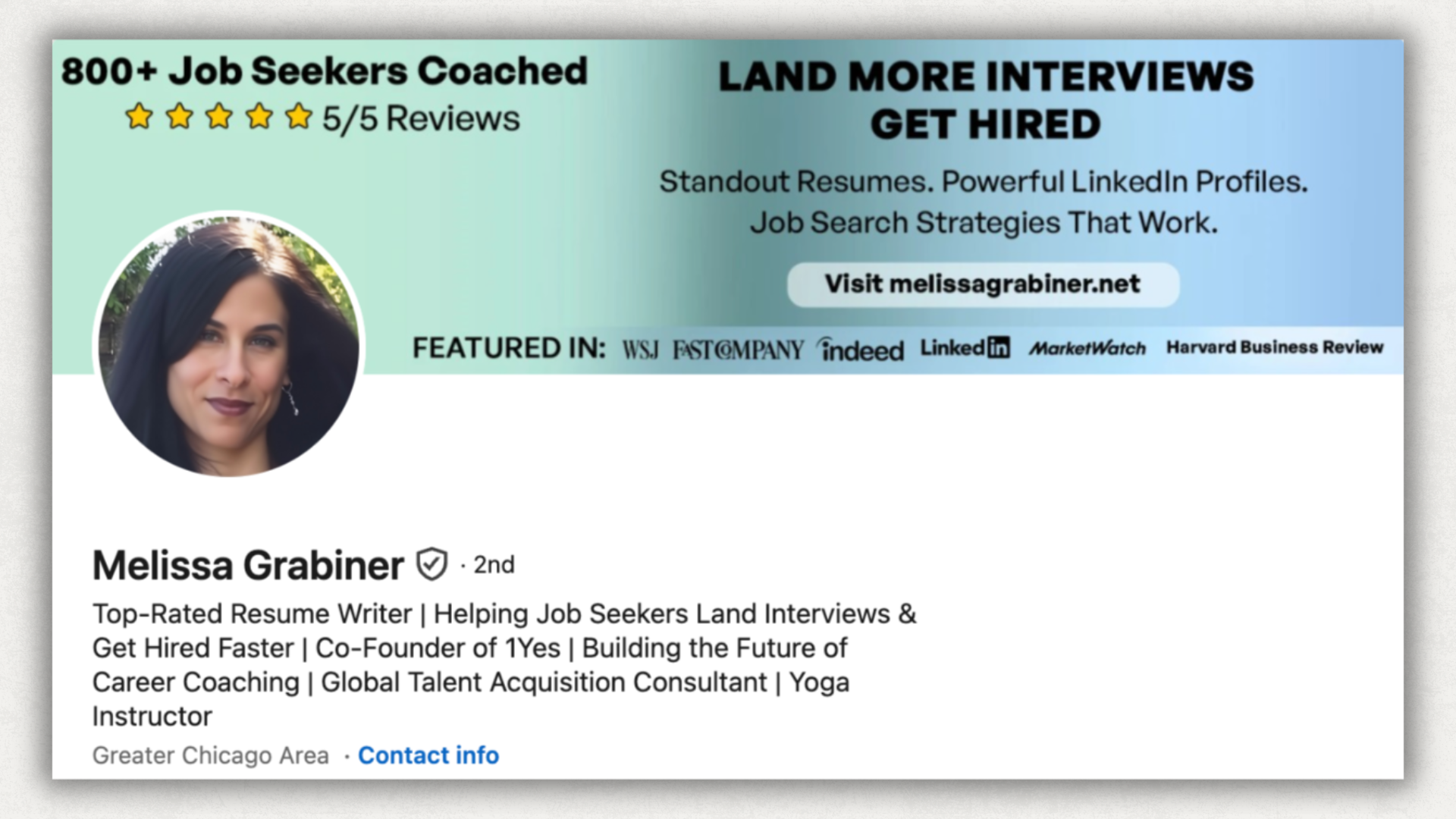
Melissa Grabiner is a top-rated resume writer, co-founder of 1Yes, and a global talent acquisition consultant. She is a LinkedIn Top Voice and has been featured in The Wall Street Journal and Fast Company.
Why follow Melissa?
- Her newsletter is unusually willing to say that the problem is not always more advice, and is sometimes just needing someone in your corner.
- She organises and promotes free events for recruiters, including a two-day summit of sixteen sessions, fifteen of them led by people still doing the job.
- Having worked both sides, resume writing and global talent acquisition, she can tell you which advice survives contact with a real screening process.
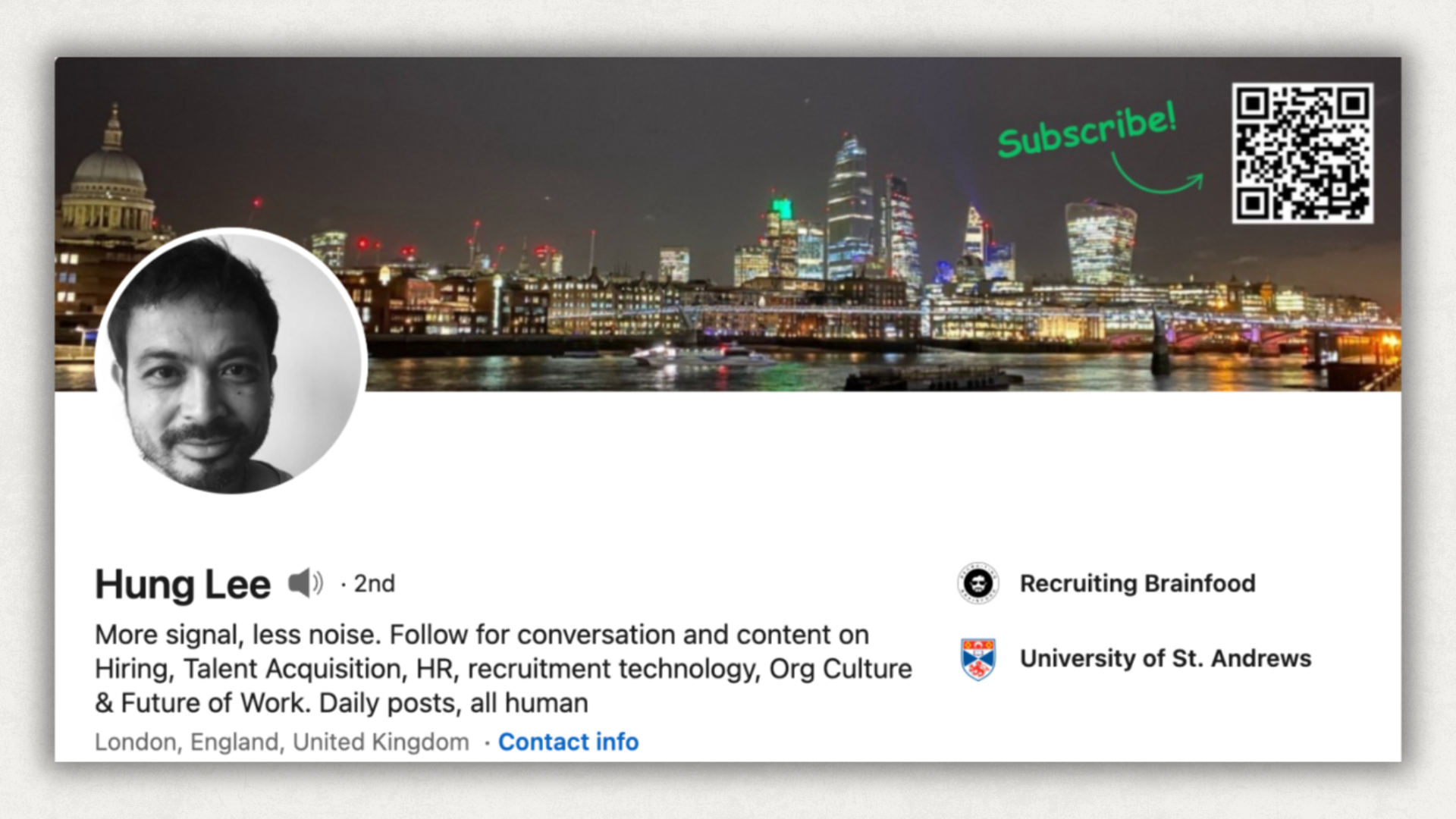
Hung Lee
Hung Lee curates Recruiting Brainfood, the newsletter most talent acquisition professionals read on a Sunday. He covers hiring, recruitment technology, org culture and the future of work.
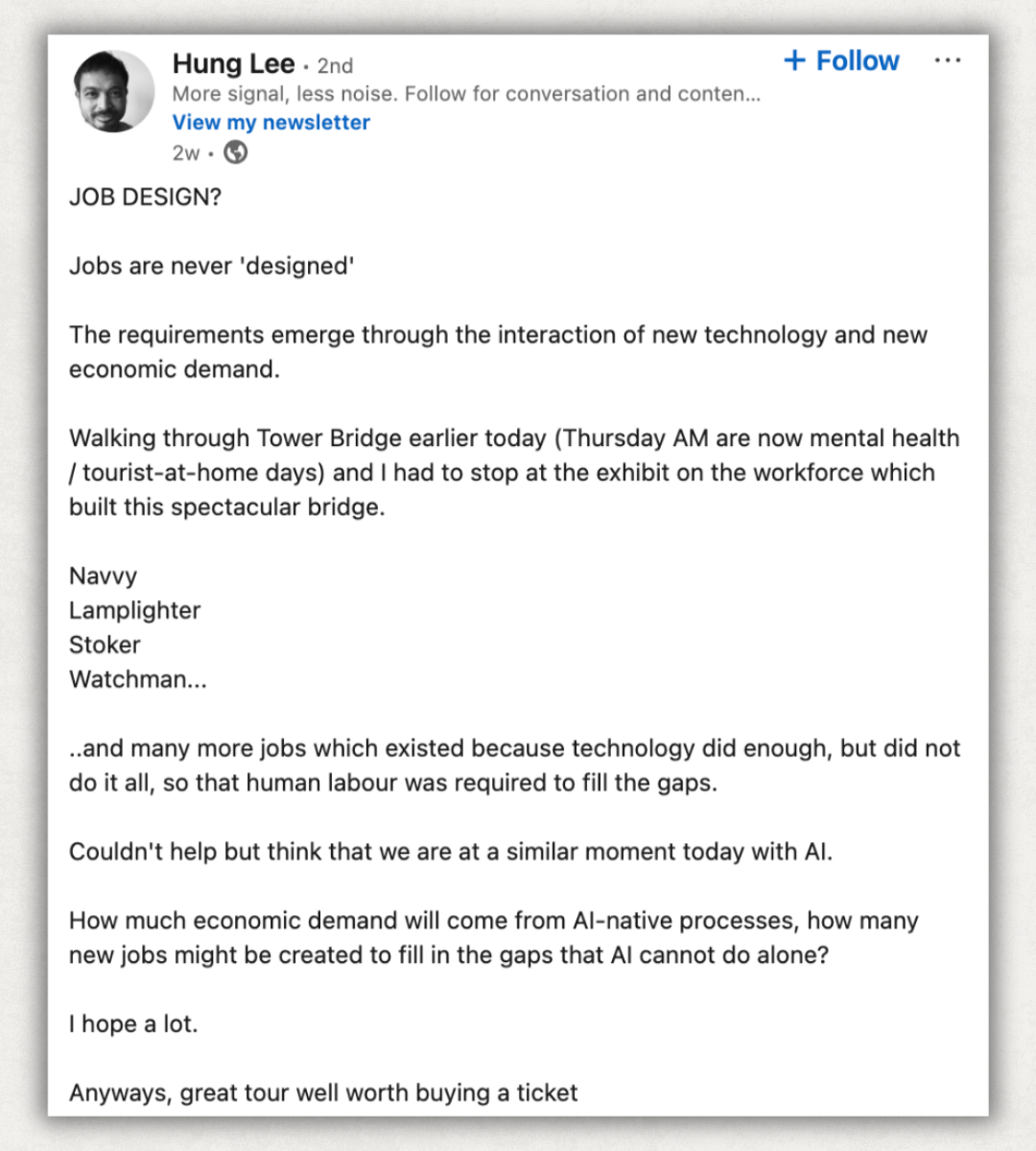
Why follow Hung?
- Recruiting Brainfood is the weekly filter, and it is the reason most recruiters know what happened without having to read everything themselves.
- His current project is National Interview Week, which aims to put a hundred thousand state-educated students through structured interview training over five years.
- He points out that his posts are all human-written. On a platform filling up with generated filler, that has quietly become a differentiator.
Leadership and Organizational Development
Where HR strategy meets what managers actually do on Monday.
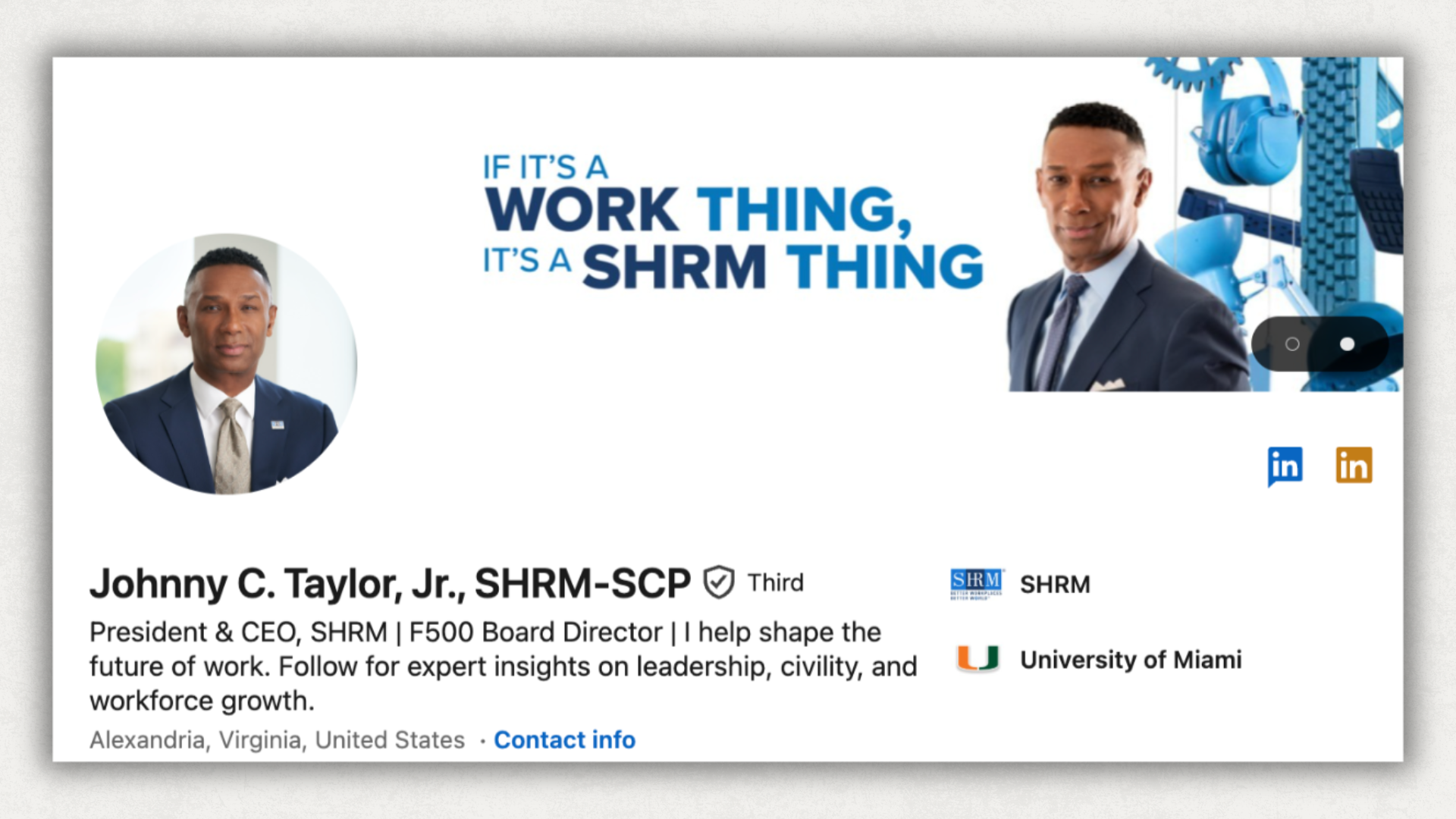
Johnny C. Taylor, Jr., SHRM-SCP
Johnny C. Taylor, Jr. is President and CEO of SHRM, the world's largest HR professional association, and a Fortune 500 board director.
Why follow Johnny?
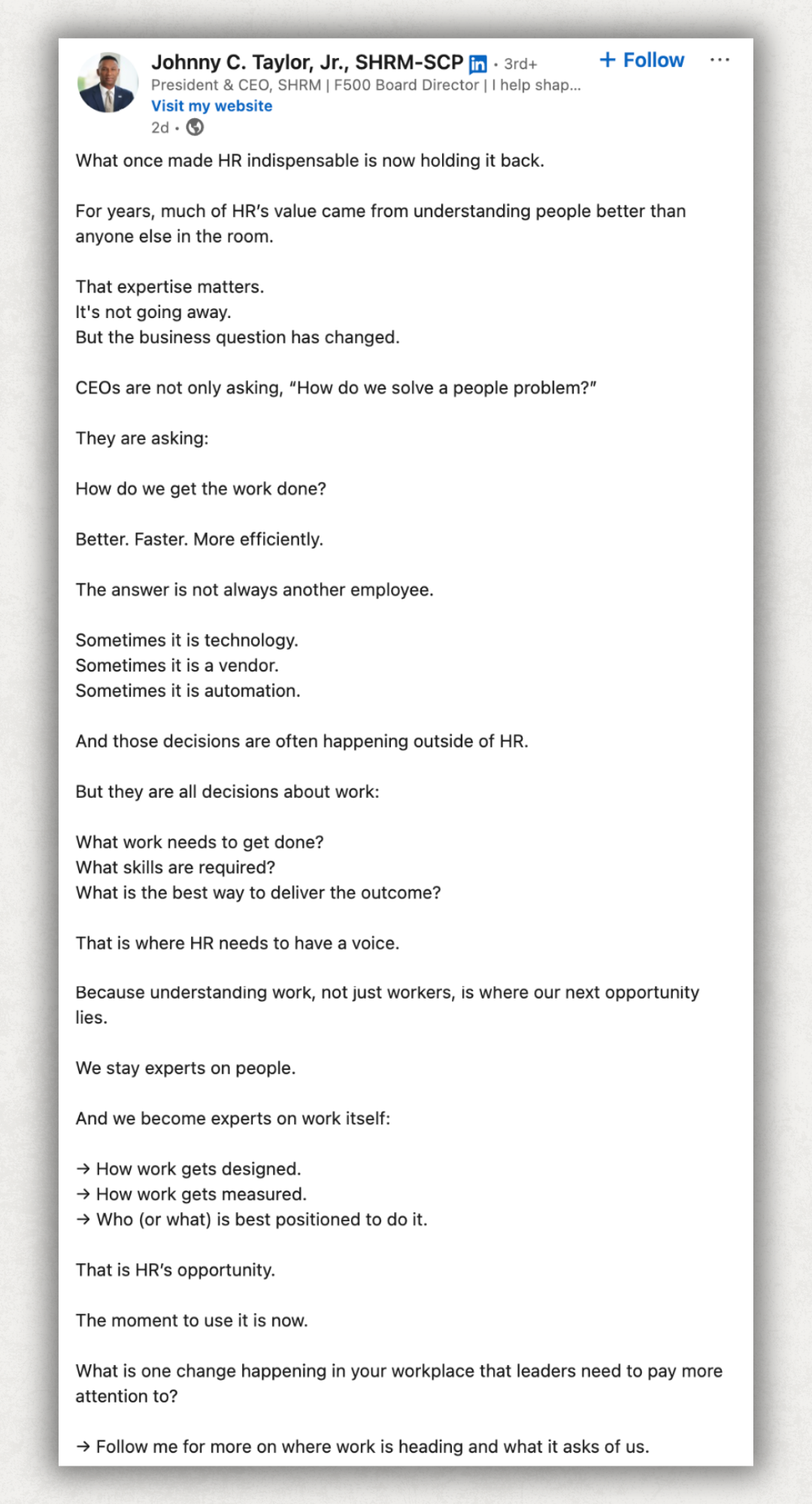
- He uses stories from outside work to ask questions about work. A Florida teacher fired for giving zeros, under a policy that no grade could fall below fifty percent, became a post about whether we prepare people for the expectations that follow school.
- Running SHRM means he sees legislative and policy shifts well before they arrive in your handbook.
- Twenty years as a lawyer, an HR leader and a chief executive, which is a rarer combination than the job titles make it sound.
Meghan M. Biro
Meghan M. Biro is founder of TalentCulture, host of the #WorkTrends podcast, and an HR technology analyst, author and speaker.
Why follow Meghan?
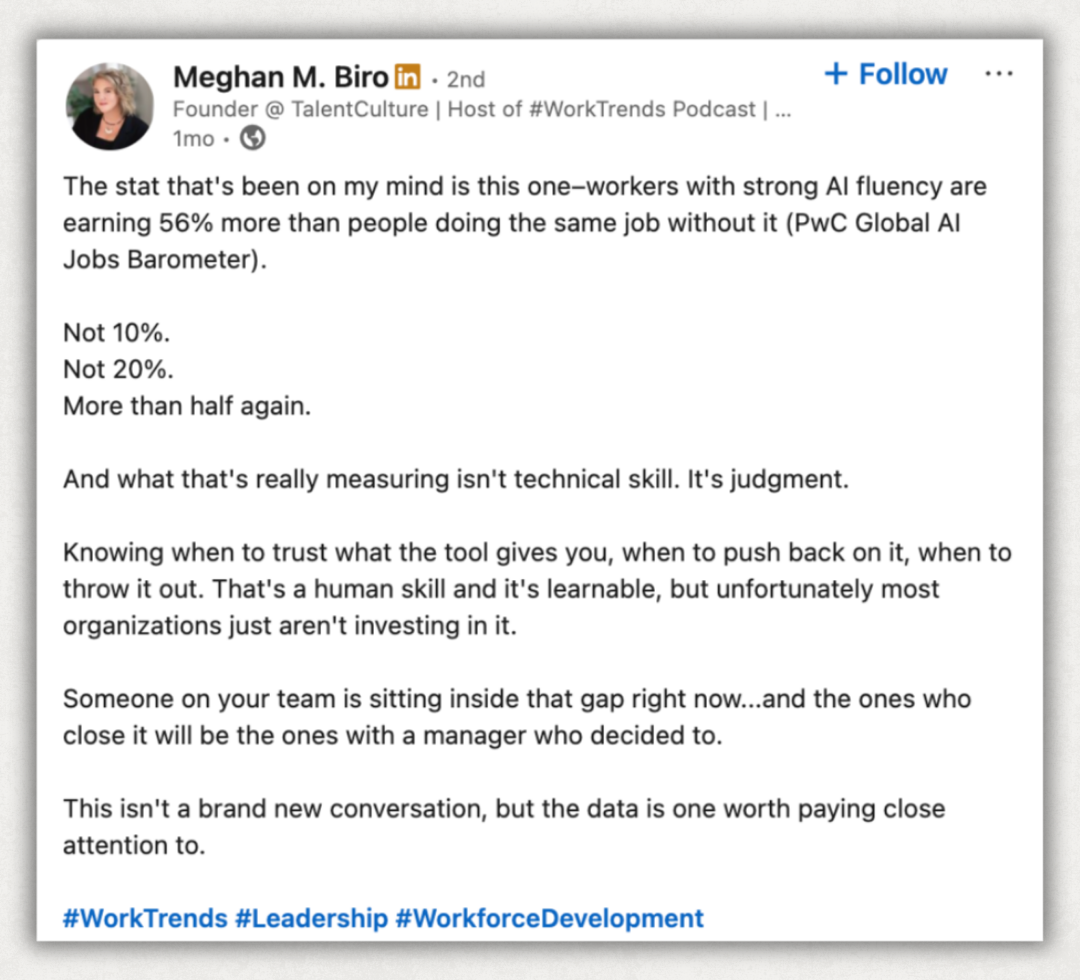
- Her recurring question about AI is the right one. If it saves your people hours every week, does that mean more output, or does it mean the role should be rebuilt around judgement.
- She publishes other people's arguments through TalentCulture rather than only her own, which makes the feed broader than a single point of view.
- #WorkTrends has run long enough to show which HR technology promises aged well and which quietly disappeared.
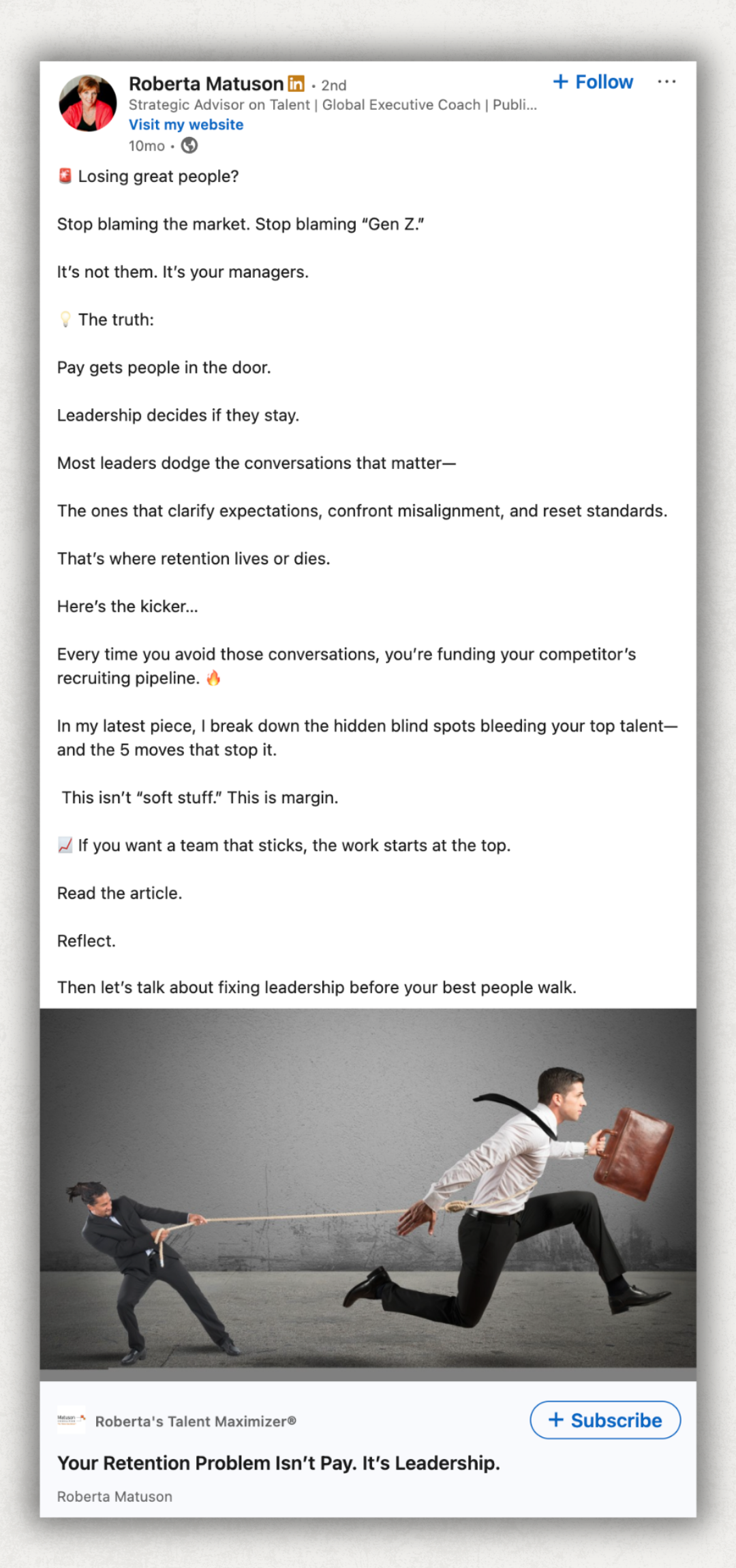
Roberta Matuson
Roberta Matuson is a strategic advisor on talent, global executive coach, public speaker and Harvard Business Review contributor, with more than 25 years helping organizations find, hire, grow and keep good people.
Why follow Roberta?
- Her post titled "Nobody Wants Your Corner Office" makes the sharpest version of the succession argument. People are not unmotivated, they are watching what the job does to current leaders and running the maths.
- She writes for the managers who actually have to do the retaining, not for the department that writes the policy about it.
- Twenty-five years of coaching shows in how specifically she can describe why one particular good person left.
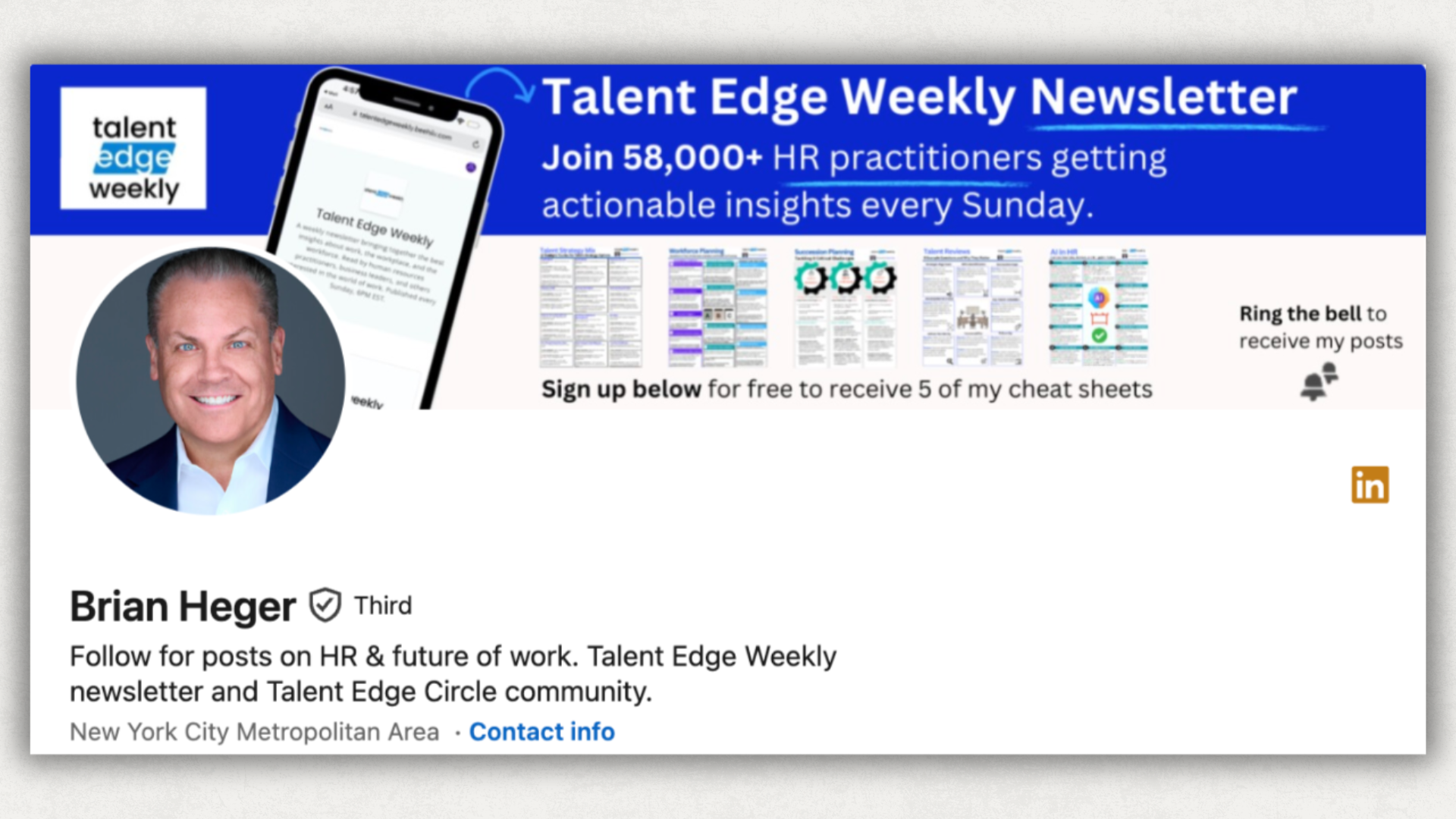
Brian Heger
Brian Heger publishes Talent Edge Weekly, a newsletter curating research and practice on talent management and workforce planning, and runs the Talent Edge Circle community.
Why follow Brian?
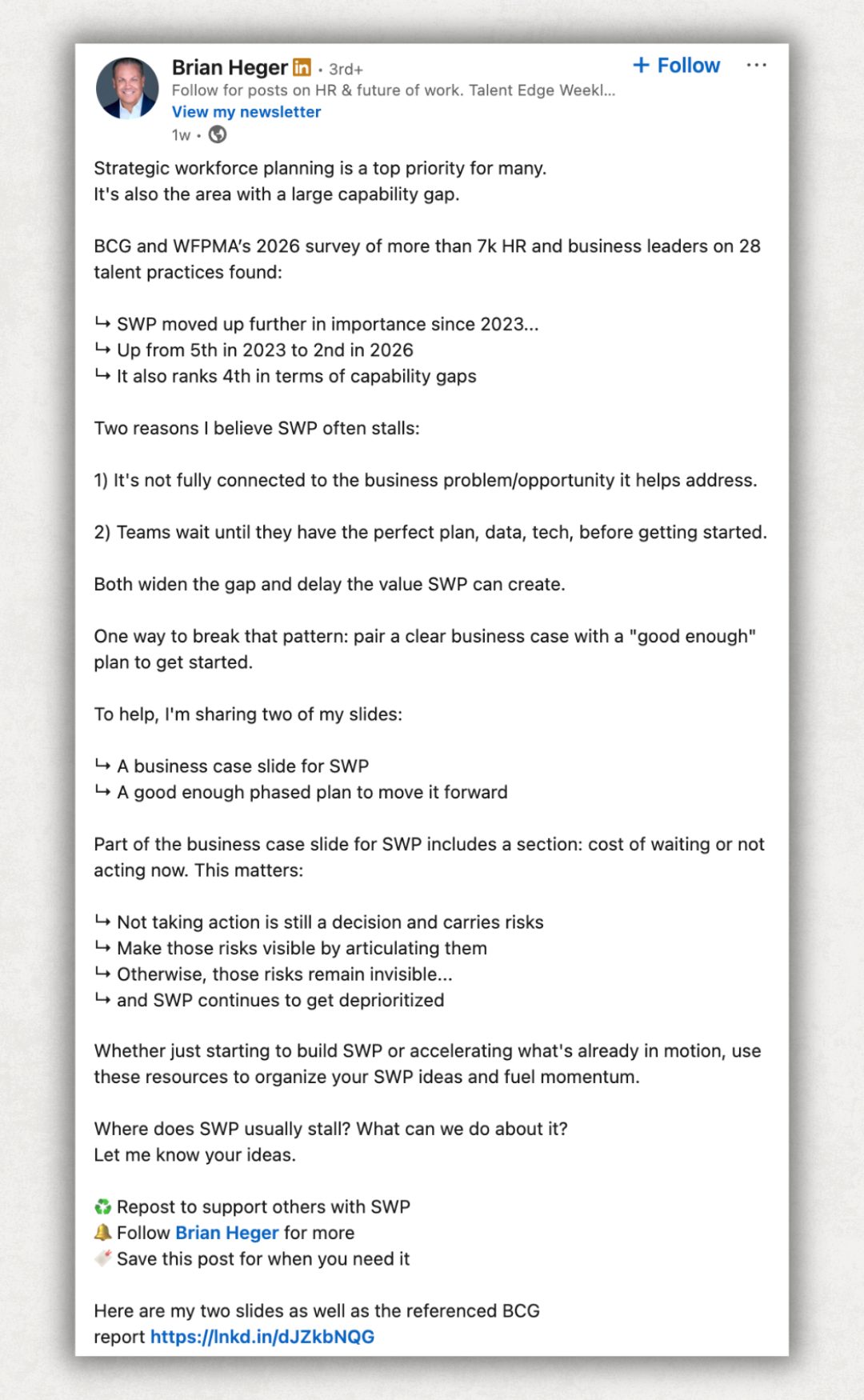
- He publishes things you can use the same day, such as a one-page set of eight questions for running a talent review, covering succession gaps, retention risk and what each successor needs next.
- Talent Edge Weekly does the reading for you, and it is why his name comes up unprompted when HR people are asked who they actually follow.
- Curation with a view attached. He tells you why something is worth your time instead of listing it.
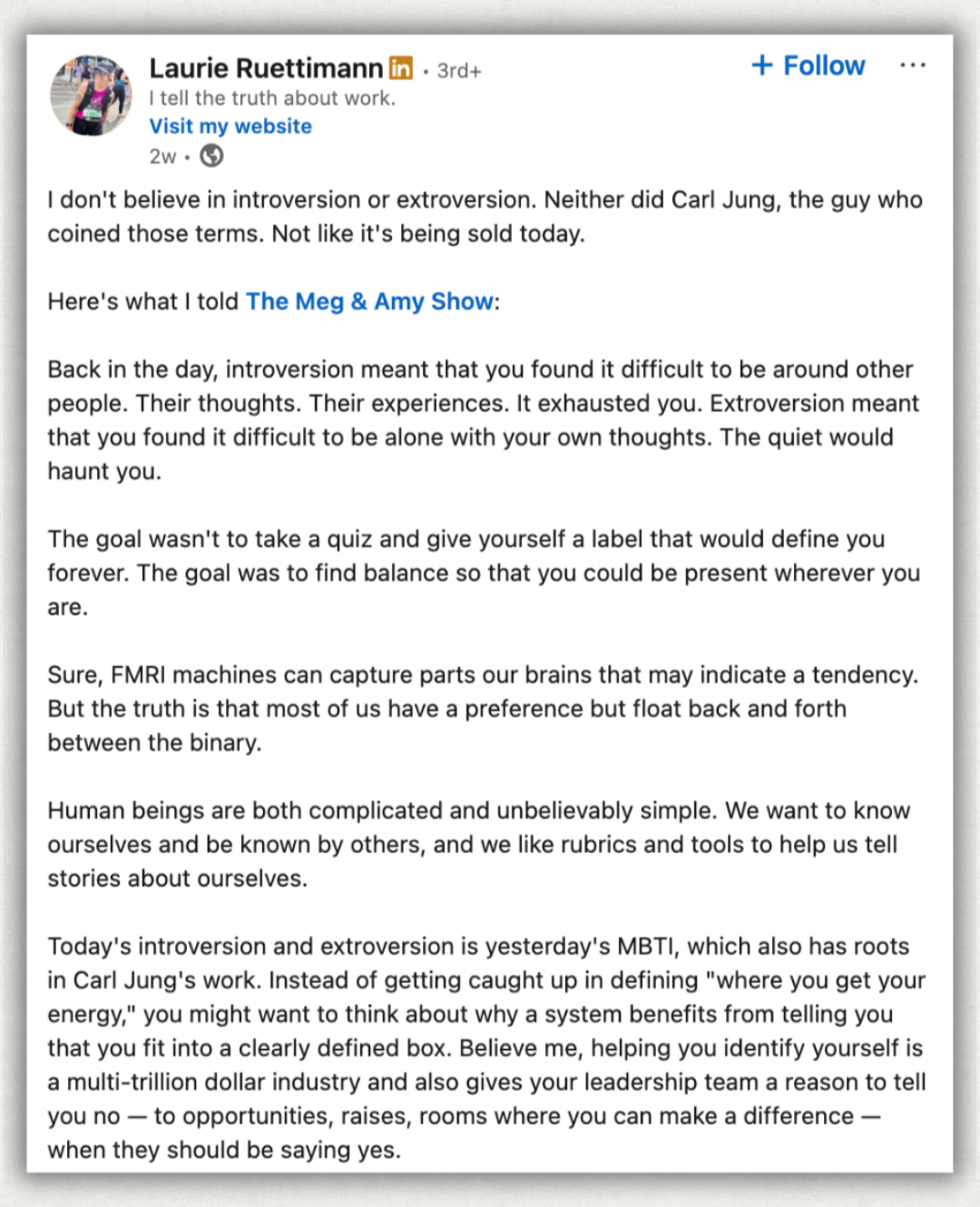
Laurie Ruettimann
Laurie Ruettimann is an author, speaker and former HR leader who writes about work, leadership and fixing your own career before trying to fix everyone else's. She wrote Betting on You.
Why follow Laurie?
- Her feed works as an amplifier. She puts specific open roles in front of her network and pushes arguments she thinks deserve more attention than they are getting.
- She treats the economics of work as a political subject, including basic income and what the alternatives to it actually cost.
- Long enough inside HR to criticise it accurately, which is a different skill from criticising it loudly.
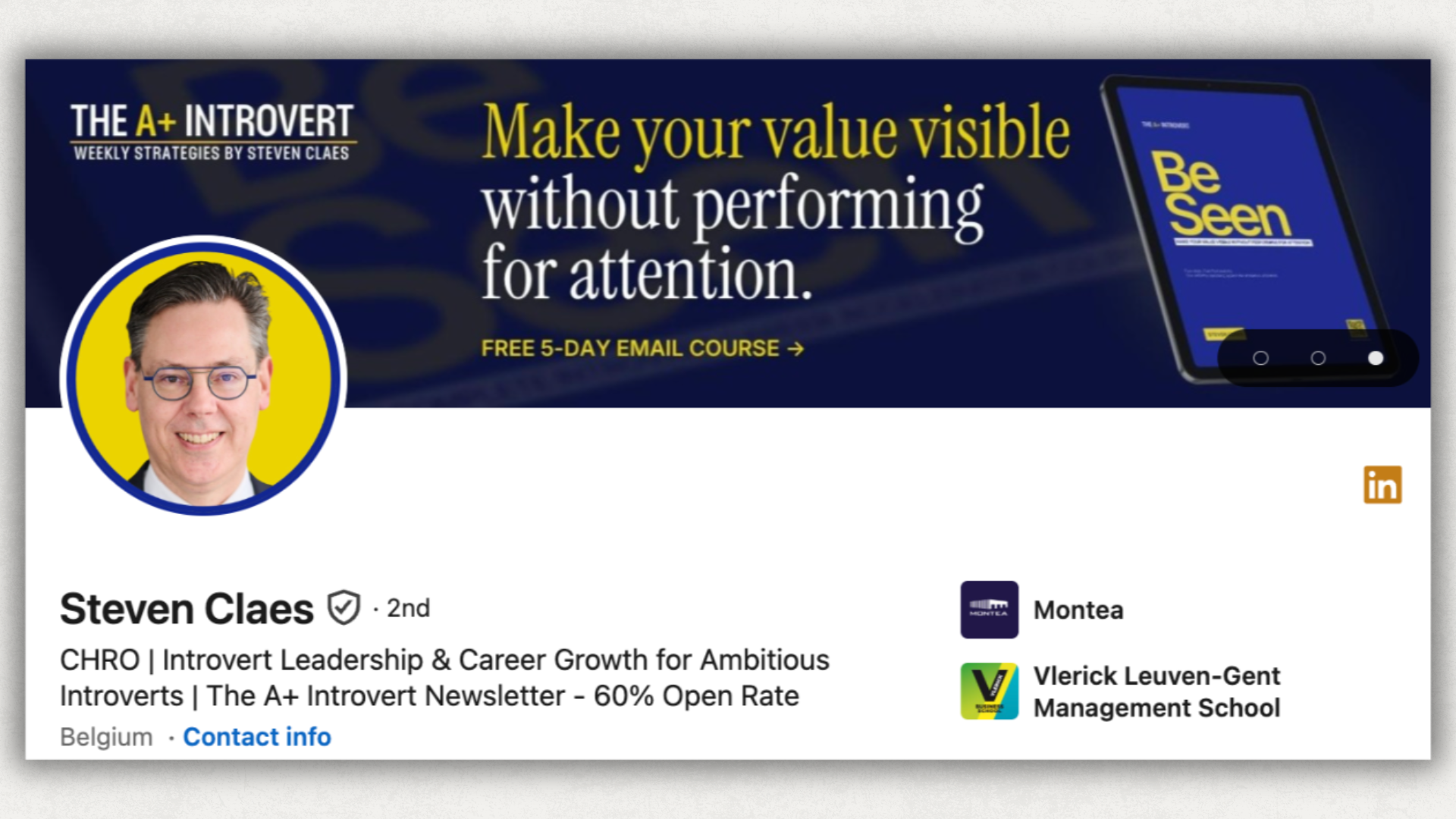
Steven Claes
Steven Claes is a CHRO who writes about leadership and career growth for introverts, and publishes The A+ Introvert newsletter.
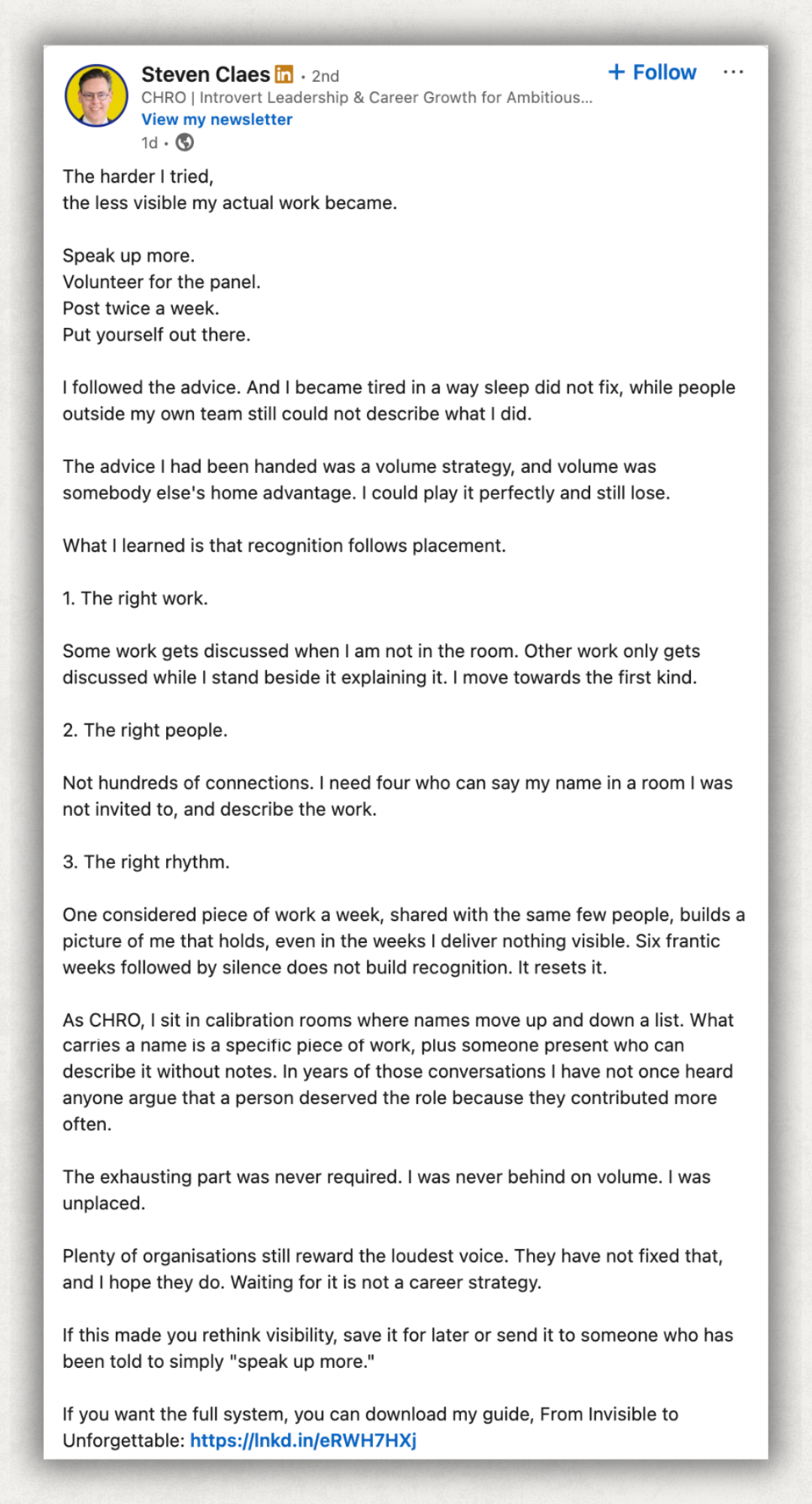
Why follow Steven?
- He wrote the clearest account of why generic visibility advice fails. He followed it, got tired in a way sleep did not fix, and people outside his own team still could not describe what he did.
- His conclusion is that recognition follows placement rather than volume, and that four people who can say your name matter more than hundreds of connections.
- A sitting chief HR officer writing about promotion decisions from the side of the table where they get made.
DEI and Workplace Culture
A short section on purpose. These three work on culture and inclusion as their actual job, not as a line in a bio.
The evidence base here is unforgiving: the standard diversity training and grievance systems most companies adopted have been shown to produce little or no change, and sometimes to make things worse. Practitioners who work on structure rather than sentiment are the ones worth your attention.
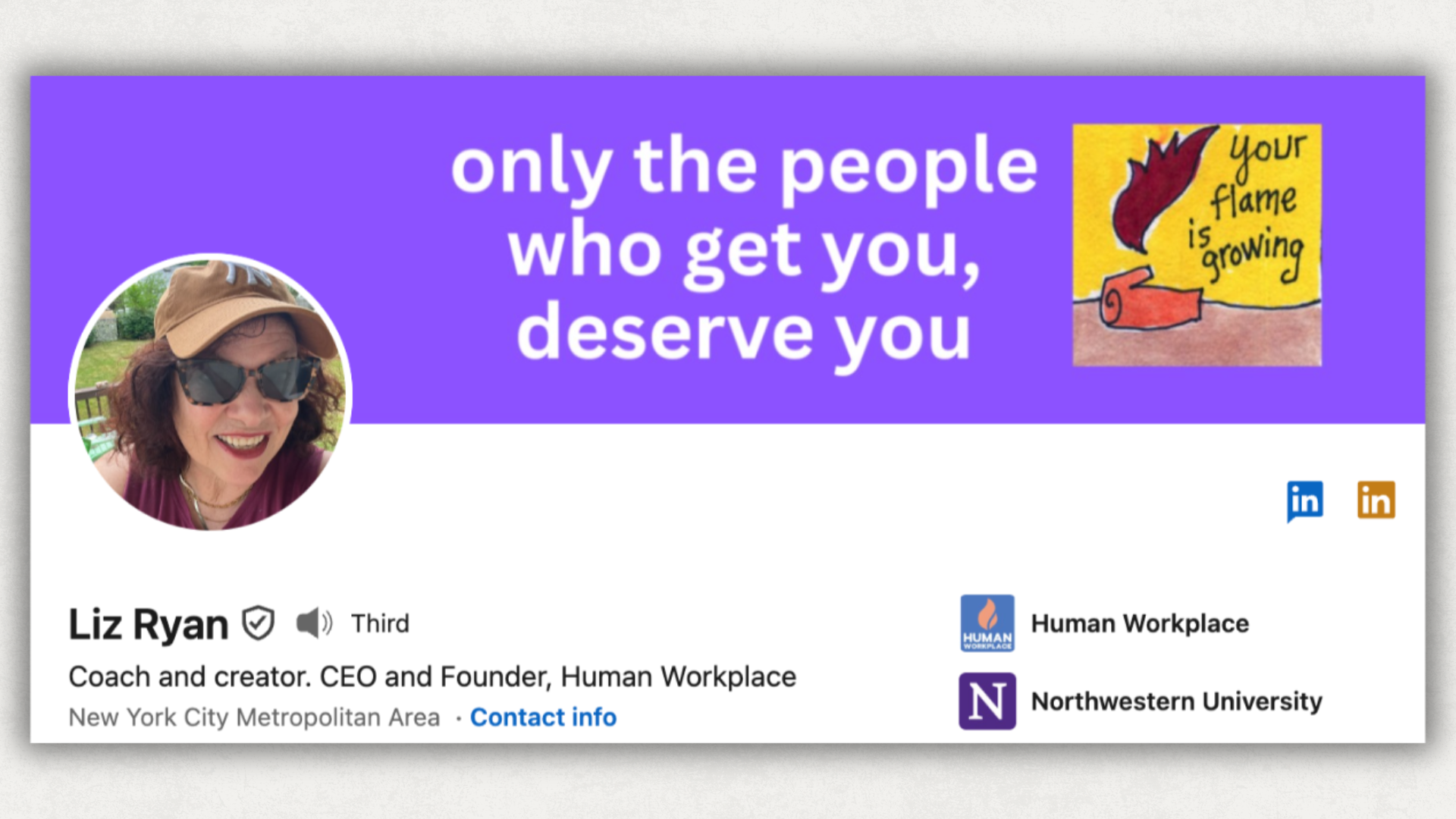
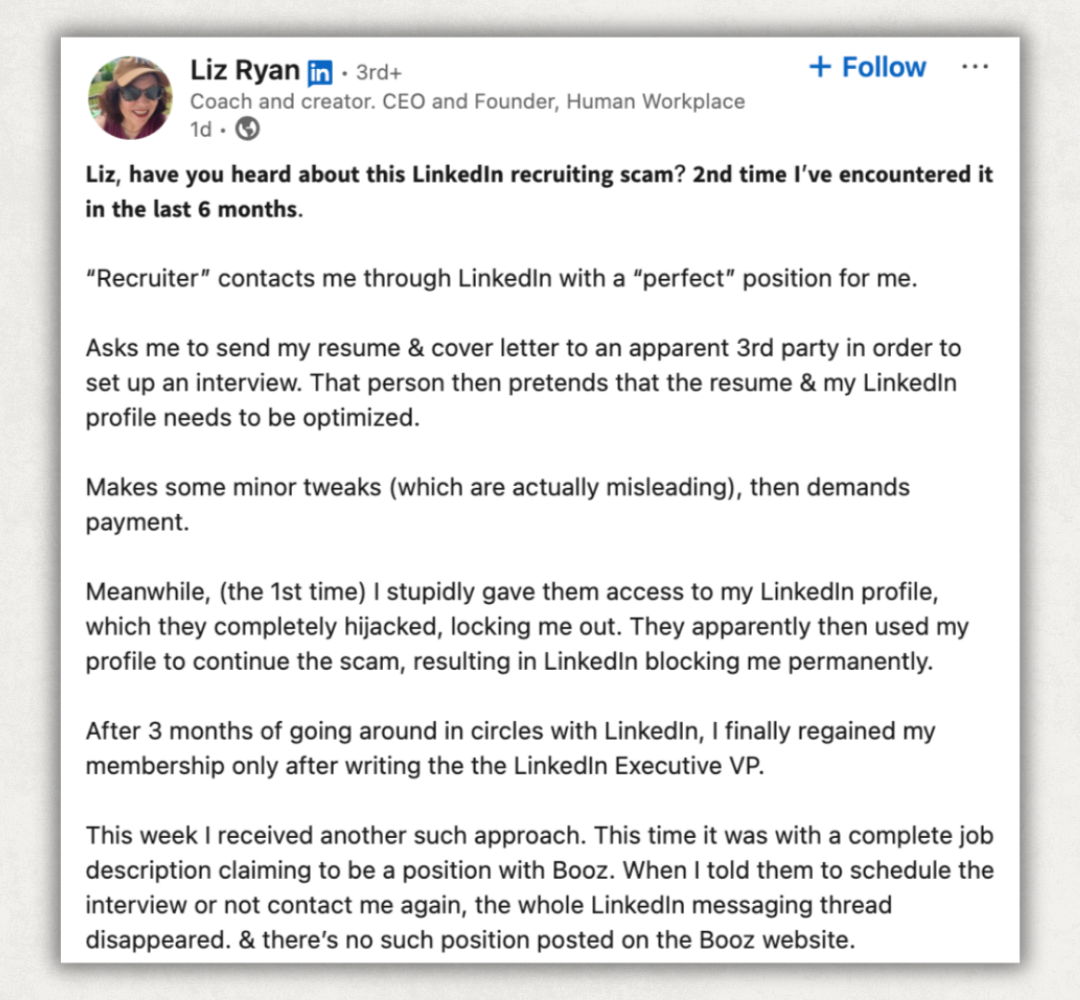
Liz Ryan
Liz Ryan is founder and CEO of Human Workplace, a coaching and consulting firm built around humanizing work. She is a LinkedIn Top Voice, keynote speaker and author.
Why follow Liz?
- She writes workplace problems as short scenarios with names attached, like the new director who has decided, without telling anyone, that a colleague now reports to her.
- Each scenario ends with a question to the reader, and the comments underneath are often more useful than the post itself.
- Her wider argument is economic and unfashionable: that the people buying products and services are the real job creators.
Lily Zheng
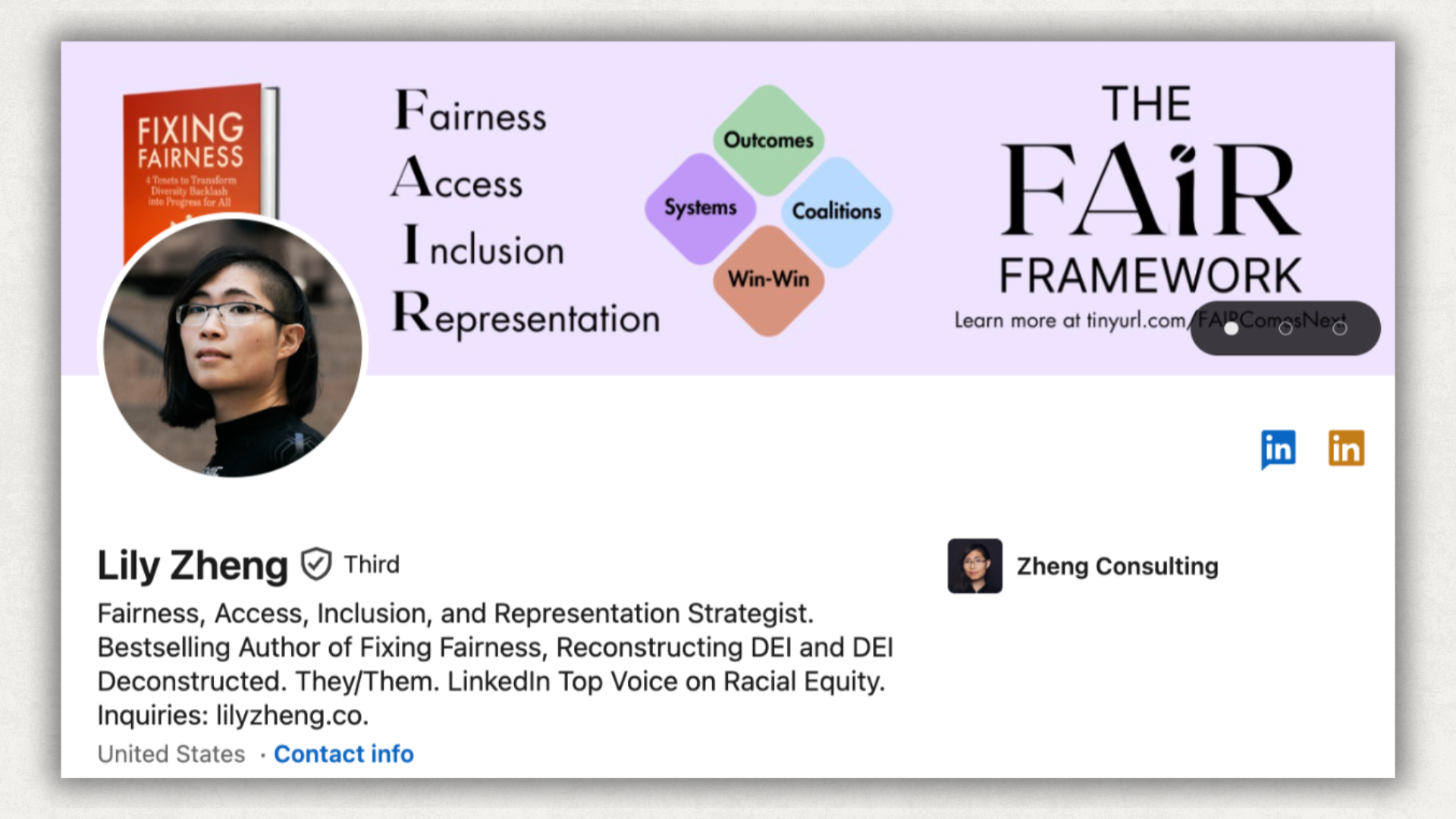
Lily Zheng is a fairness, access, inclusion and representation strategist, and the author of Fixing Fairness, Reconstructing DEI and DEI Deconstructed. They are a LinkedIn Top Voice on racial equity.
Why follow Lily?
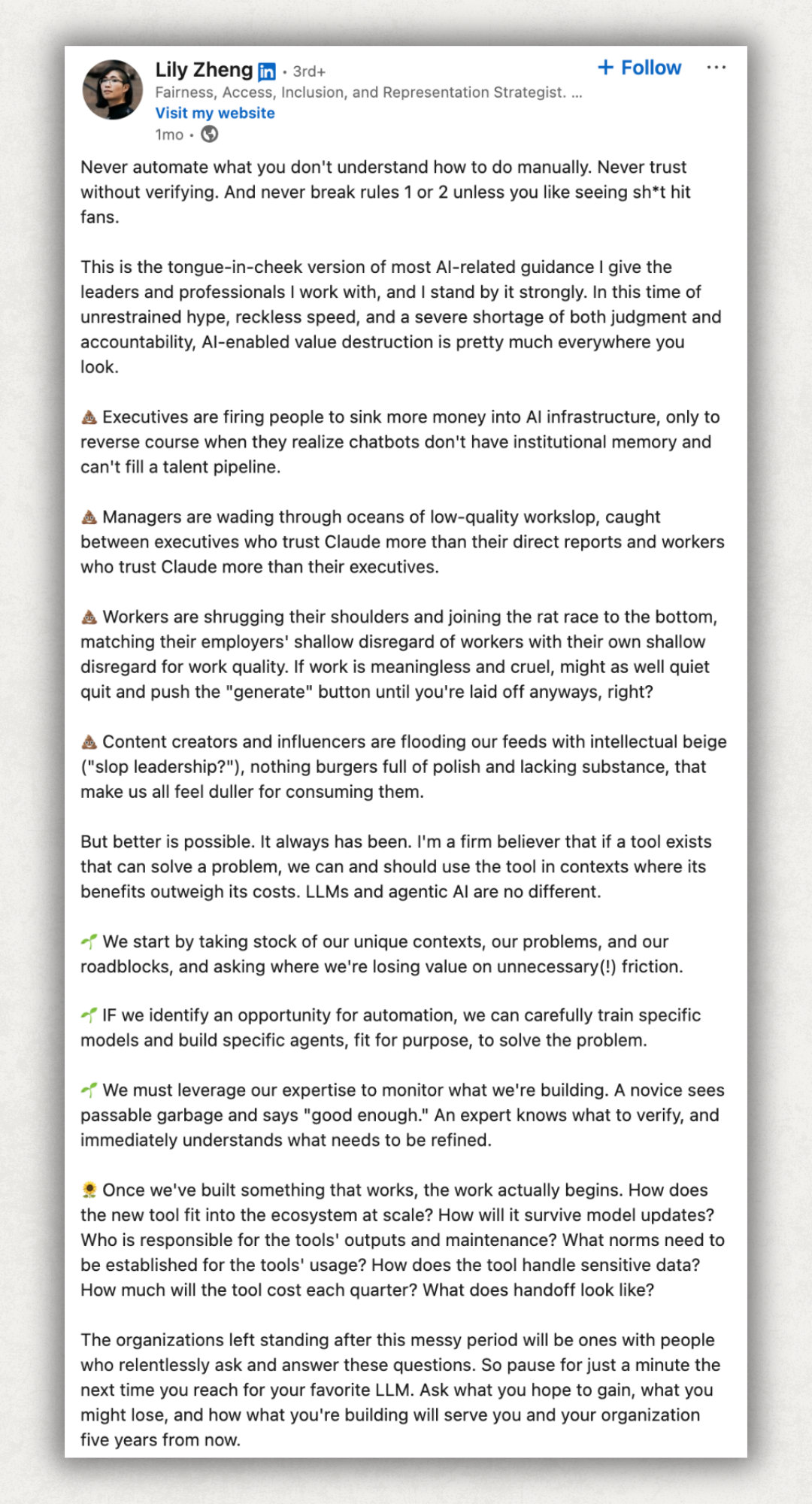
- Their breakdown of a recent EEOC complaint is the best short case for why this work has to be done properly. The employee alleges she was the only Black person on her team, was placed alone in a breakout room during diversity training, complained, and was later let go.
- They took no position on whether the allegations are true, which is the right call while it is unresolved, and drew the useful point instead: the practices that create legal risk are the same practices that make the training ineffective in the first place.
- They argue for teaching concrete job-relevant skills instead of running awareness sessions, which is a harder sell and a much better answer.
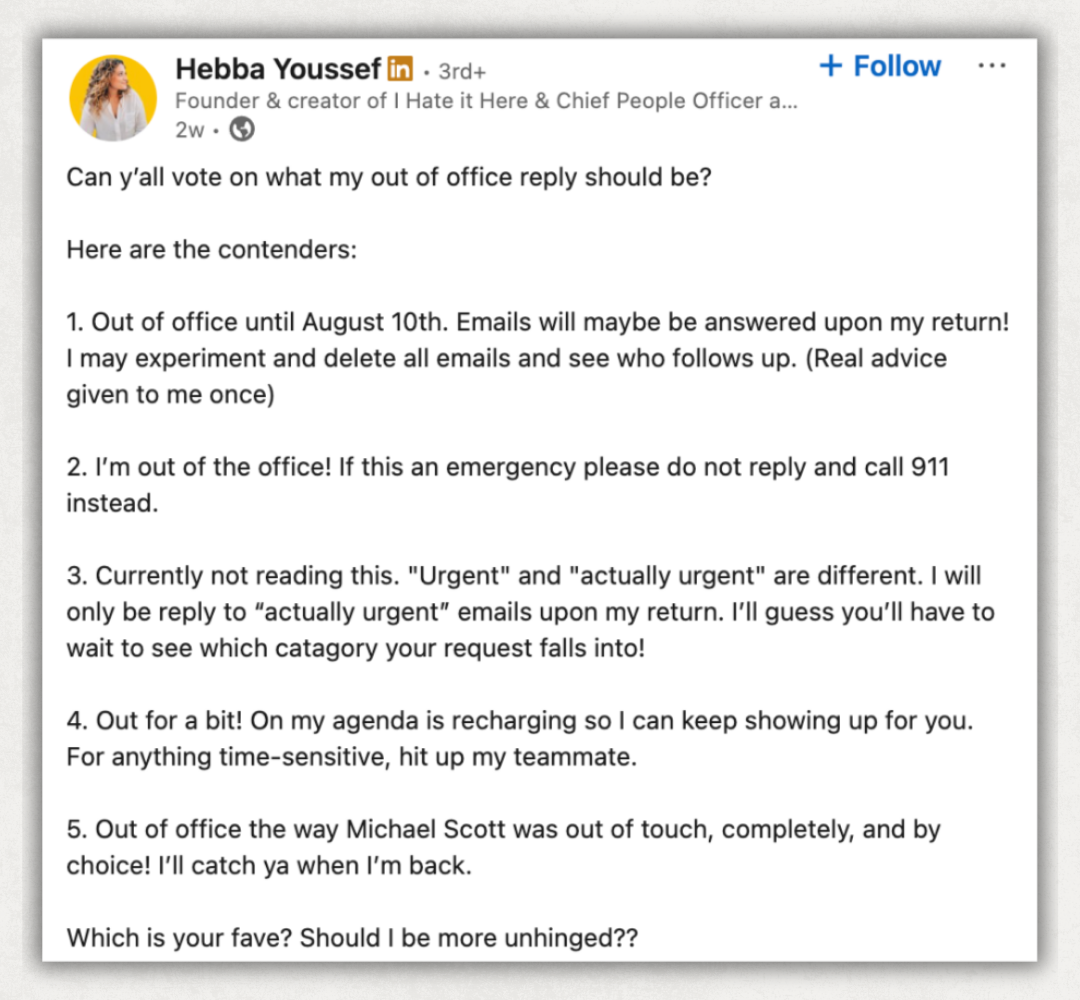
Hebba Youssef
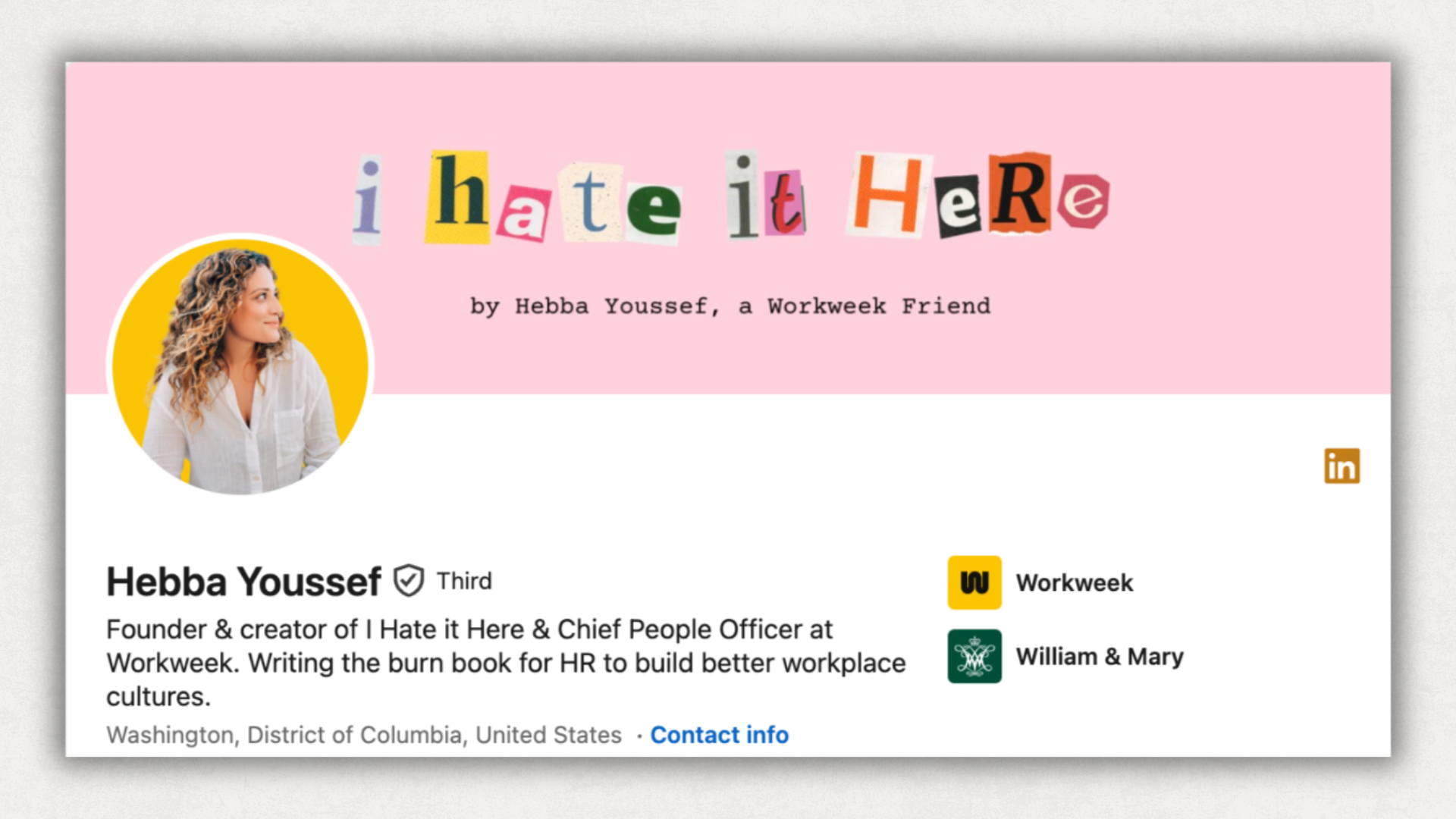
Hebba Youssef is Chief People Officer at Workweek and the founder of I Hate It Here, a newsletter and community for HR people with well over a hundred thousand subscribers.
Why follow Hebba?
- She interviews people with data rather than opinions. Her Leadership Divide series closed with the chief executive of Hogan Assessments on how little of what we believe about leaders the evidence actually supports.
- Her framing is that leadership fails at selection: wrong people, wrong criteria, and hiring processes built around stereotypes nobody has checked.
- I Hate It Here is written for the people doing HR rather than the people buying software for them, and the difference shows up within a paragraph.
Career Development and Coaching
For HR professionals building their own careers, and for anyone advising others on theirs.
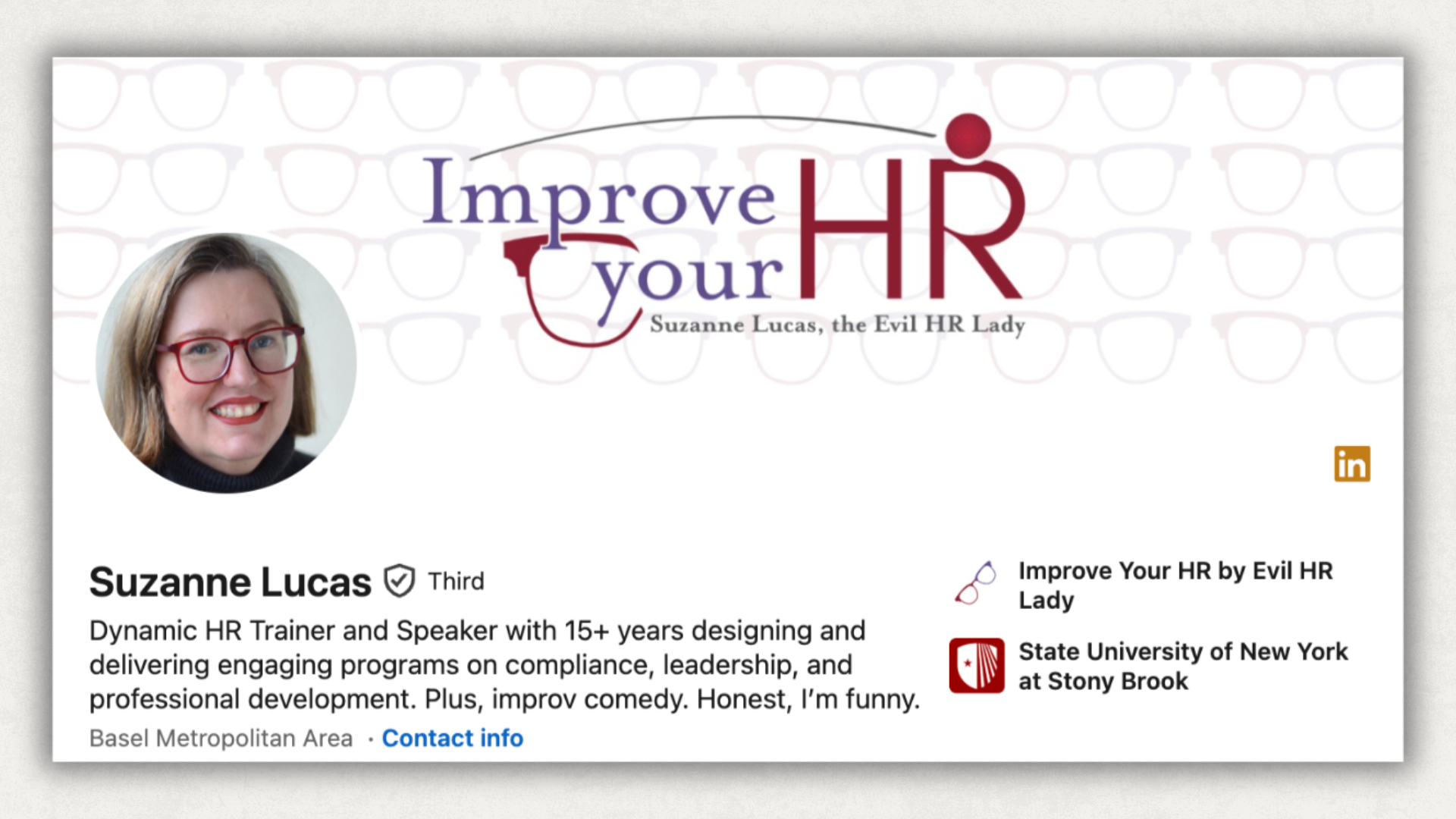
Suzanne Lucas
Suzanne Lucas writes and speaks as the Evil HR Lady. She is an HR trainer and speaker with 15+ years designing programs on compliance, leadership and professional development, and she does improv comedy.
Why follow Suzanne?
- She catches the things executives say out loud. When the chief executive of Bupa explained that he orders water and waits to see whether the candidate orders wine, she took the test apart on both grounds.
- Compliance questions get answered plainly, without the hedging that makes most employment-law content useless.
- The improv background shows in the timing, which is most of the reason anyone reads this much about employment law voluntarily.
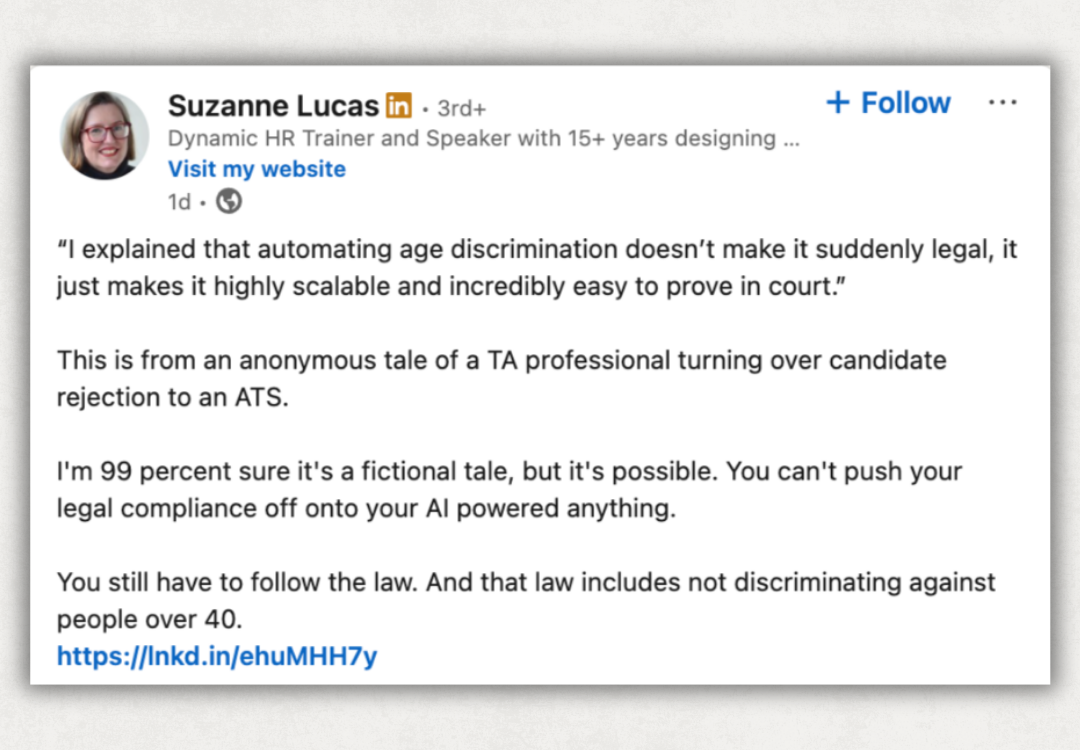
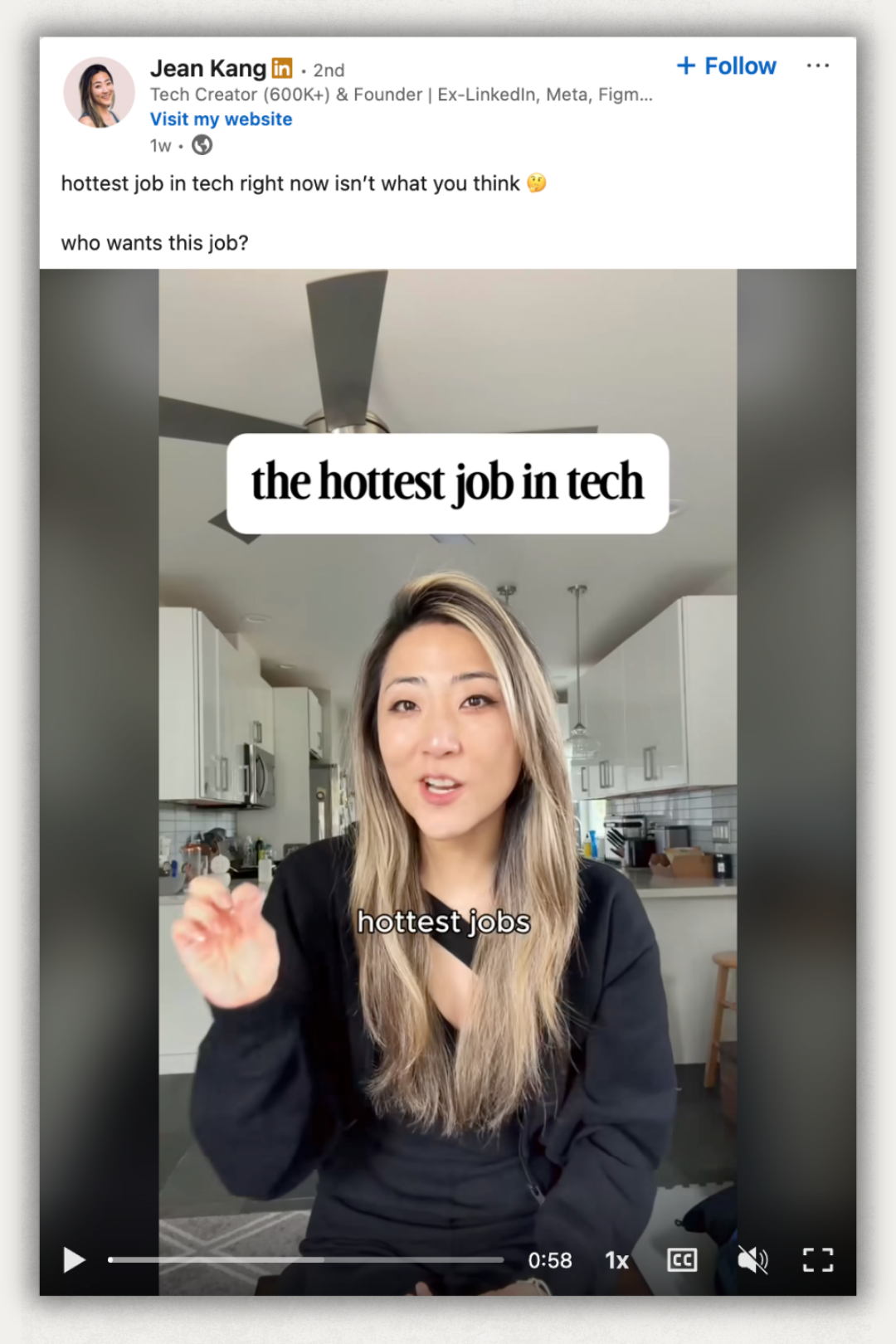
Jean Kang
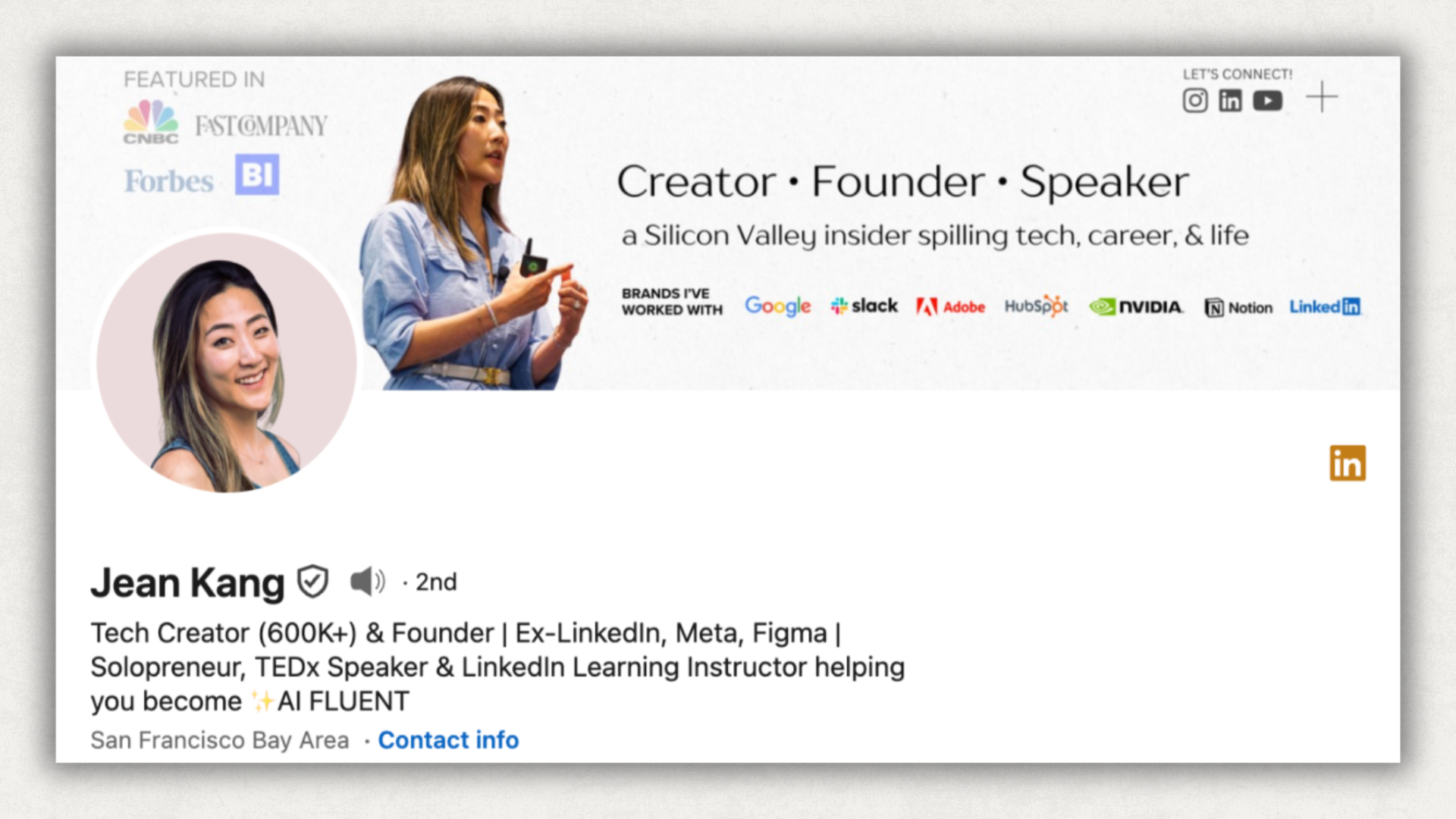
Jean Kang is a tech creator with over 600,000 followers, a founder, TEDx speaker and LinkedIn Learning instructor. She previously worked at LinkedIn, Meta and Figma.
Why follow Jean?
- She left three of the best jobs in tech to work for herself, and has been honest about both halves of that, including the parts she is still working out two years in.
- Six hundred thousand followers built from steady career advice rather than one viral moment, which makes the method worth studying on its own.
- Her current subject is practical AI skill, framed around staying employable rather than around the technology being interesting.
Angel Kilian
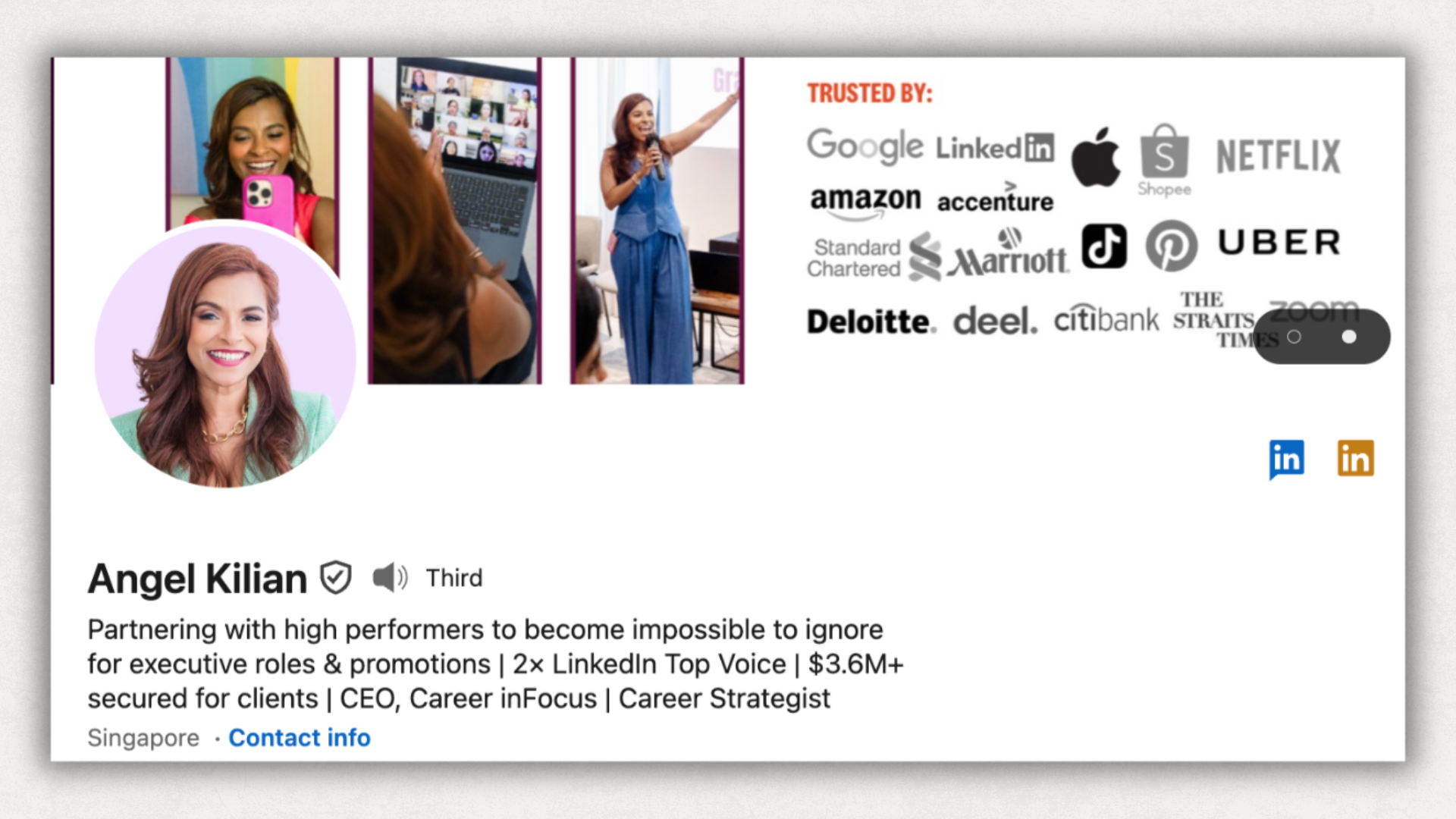
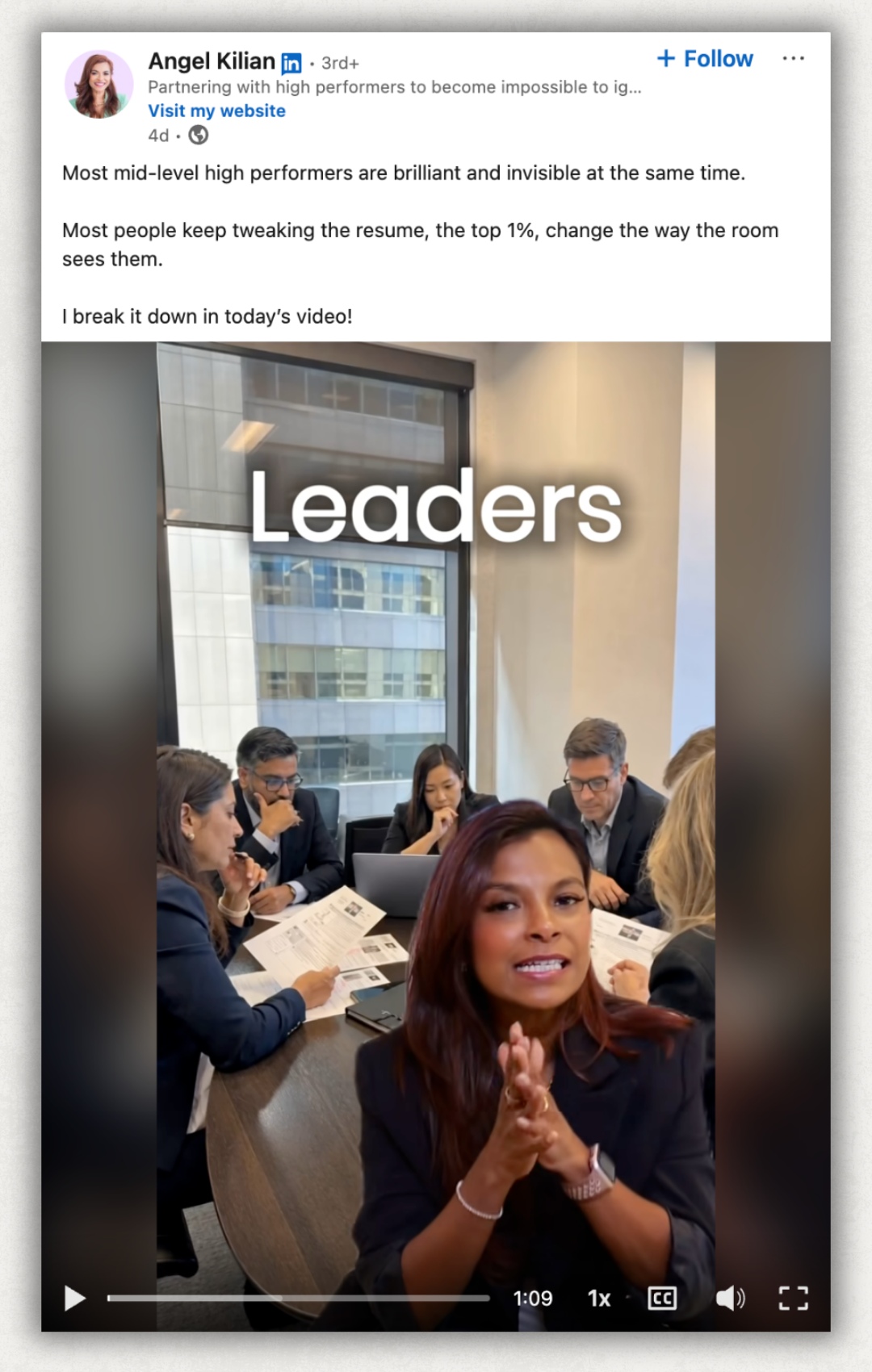
Angel Kilian is CEO of Career inFocus and a career strategist working with high performers moving into executive roles. She is a two-time LinkedIn Top Voice.
Why follow Angel?
- Her practice is executive negotiation, and she reports securing over three and a half million dollars in compensation for clients, which is a number you can hold her to.
- The advice covers parts of the process nobody else writes about, including how to walk into a high-stakes conversation already sounding like the person they want.
- She is unembarrassed about the human mechanics of confidence, down to the playlist she puts on before a negotiation.
Shulin Lee
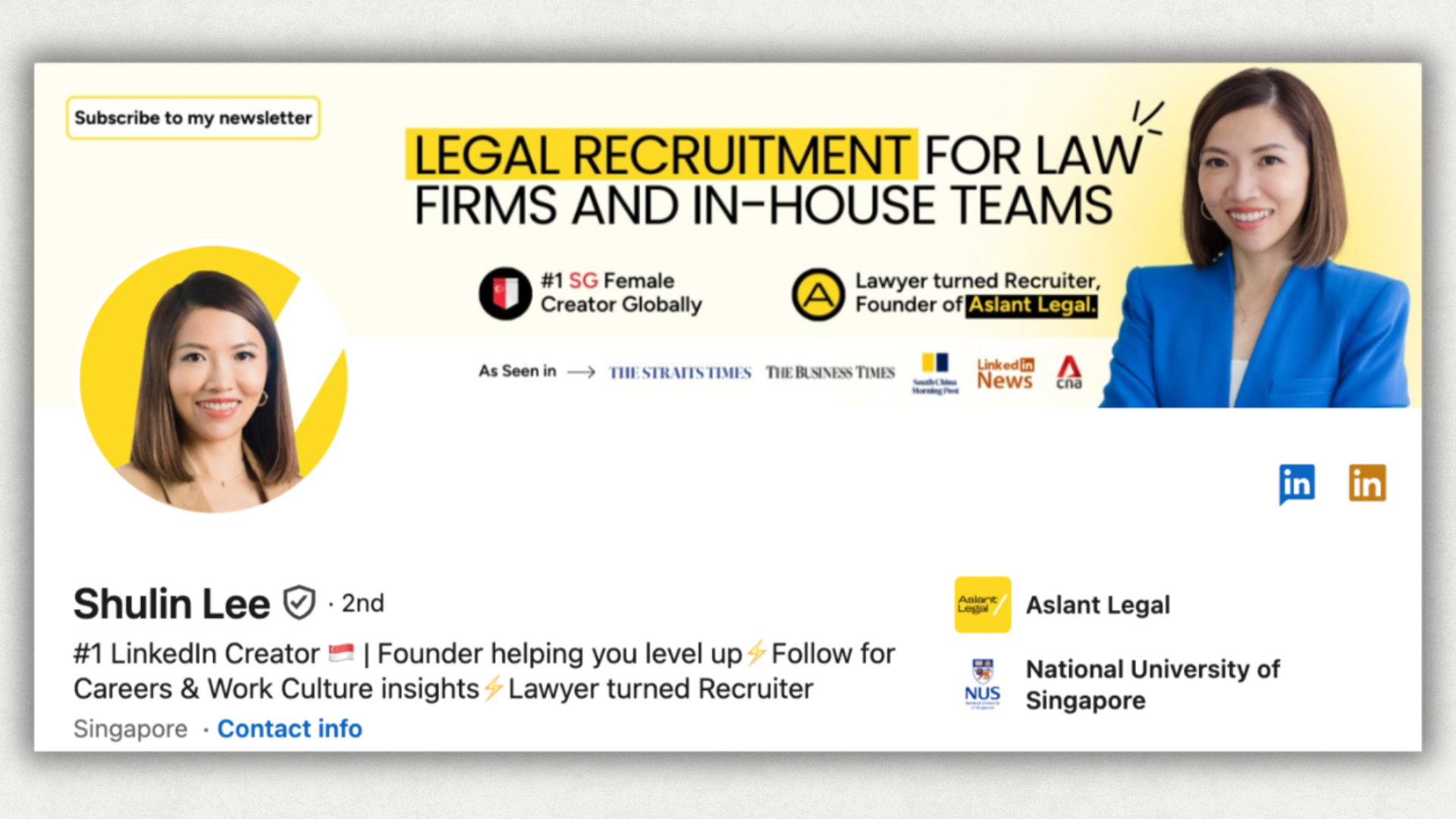
Shulin Lee is a lawyer turned recruiter and Singapore's top-ranked LinkedIn creator, writing on careers and work culture.
Why follow Shulin?
- She posts live roles with the detail lawyers actually filter on, including seniority bands measured in years post-qualification.
- Careers advice aimed at professional services, where the progression rules and the timing work differently from the rest of the market.
- A lawyer who became a recruiter, so the career-change posts come from having made the change rather than from advising on it.
Become a Recognized HR Leader with AuthoredUp
Want to connect with your audience and share HR insights like a pro? AuthoredUp empowers HR leaders to craft engaging LinkedIn content and build a standout personal brand.
Here’s how AuthoredUp simplifies content creation:
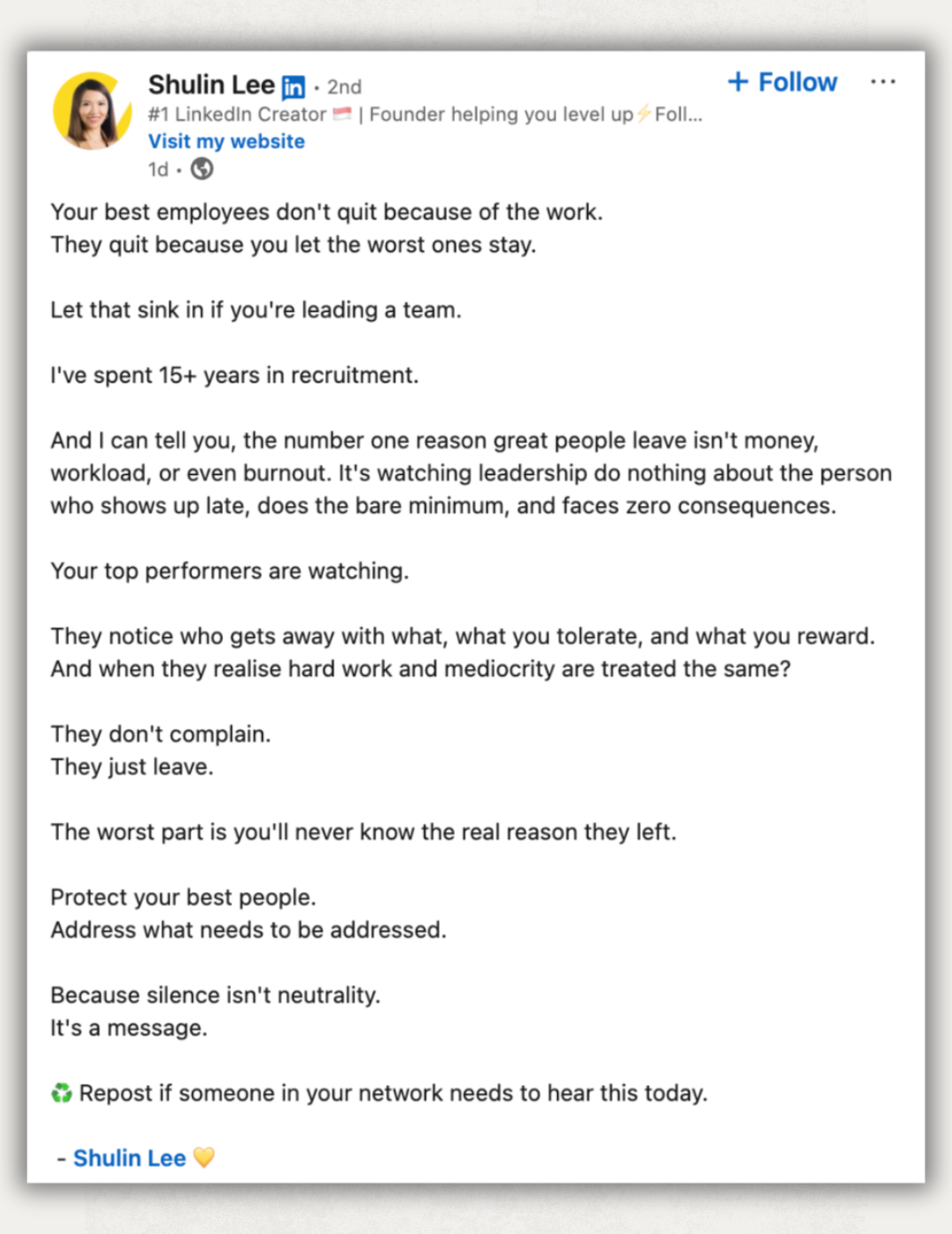
- Leverage Saved Posts: Collect and organize saved LinkedIn posts, filter high-performing content, and use it as inspiration for your next big idea.
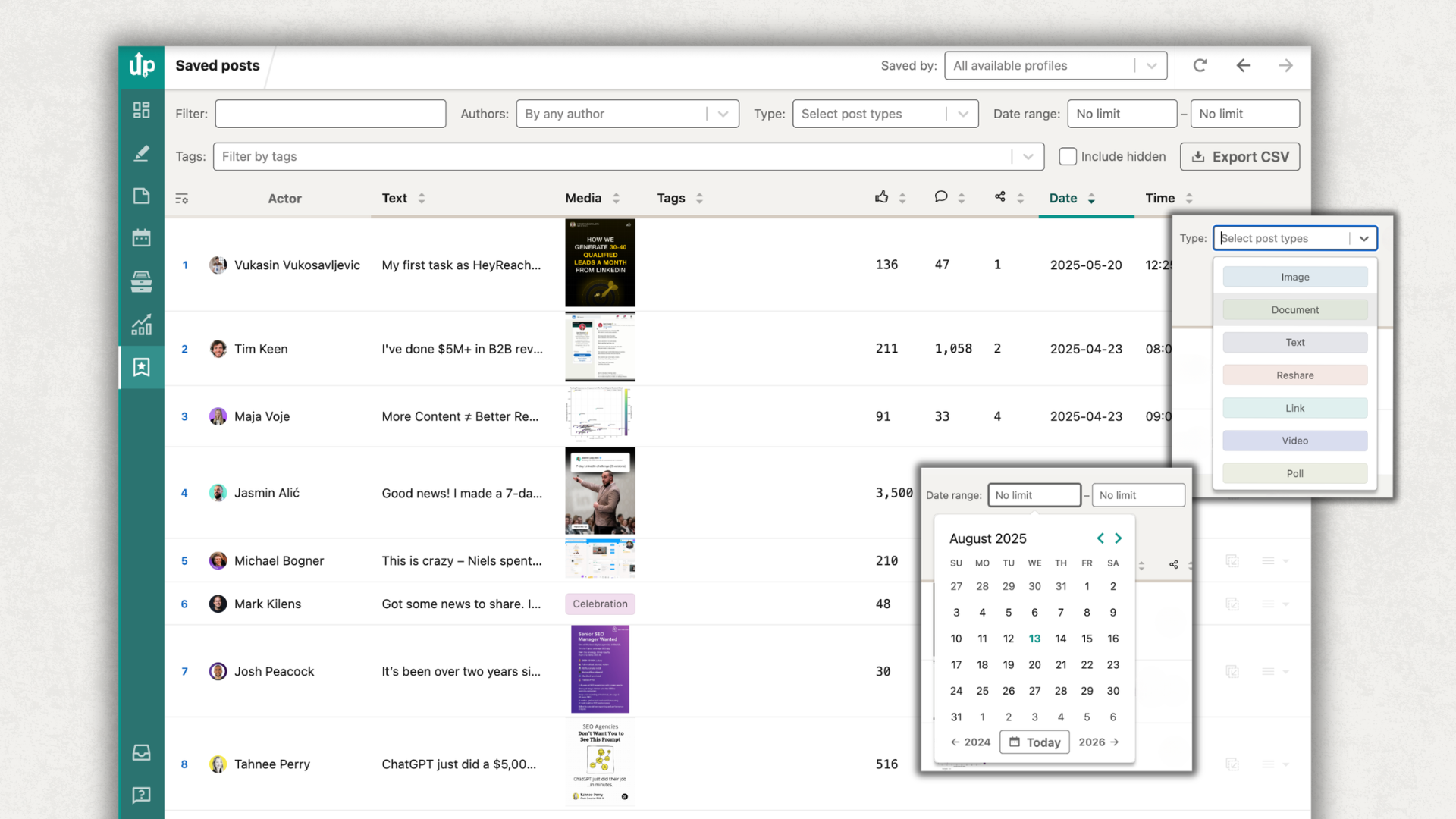
- Understand What Works: Use analytics to see which posts resonate most with your audience so you can create content that drives better engagement.
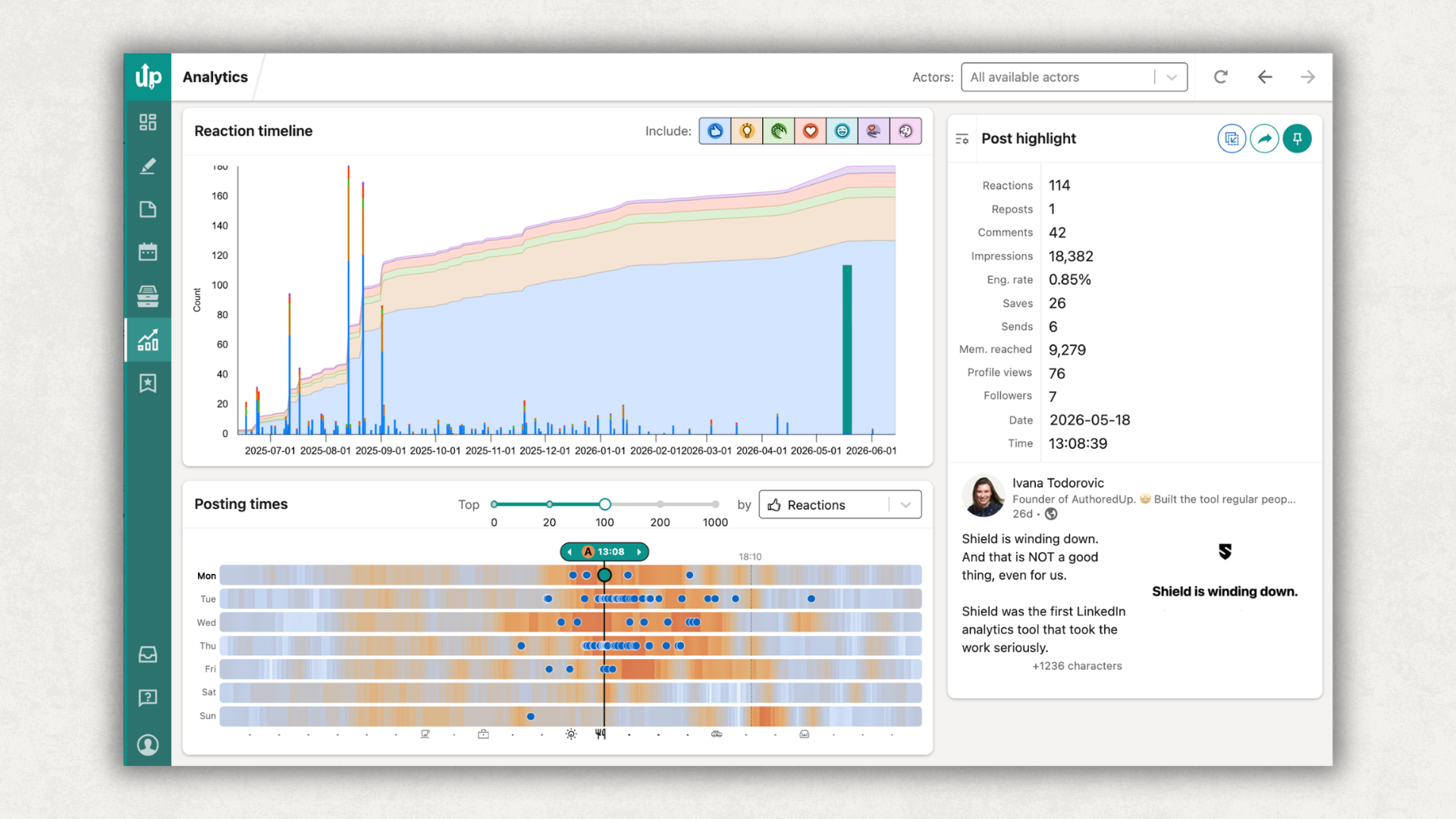
- Streamline Your Writing: Add bold, italics, and bullet points to make posts visually engaging.
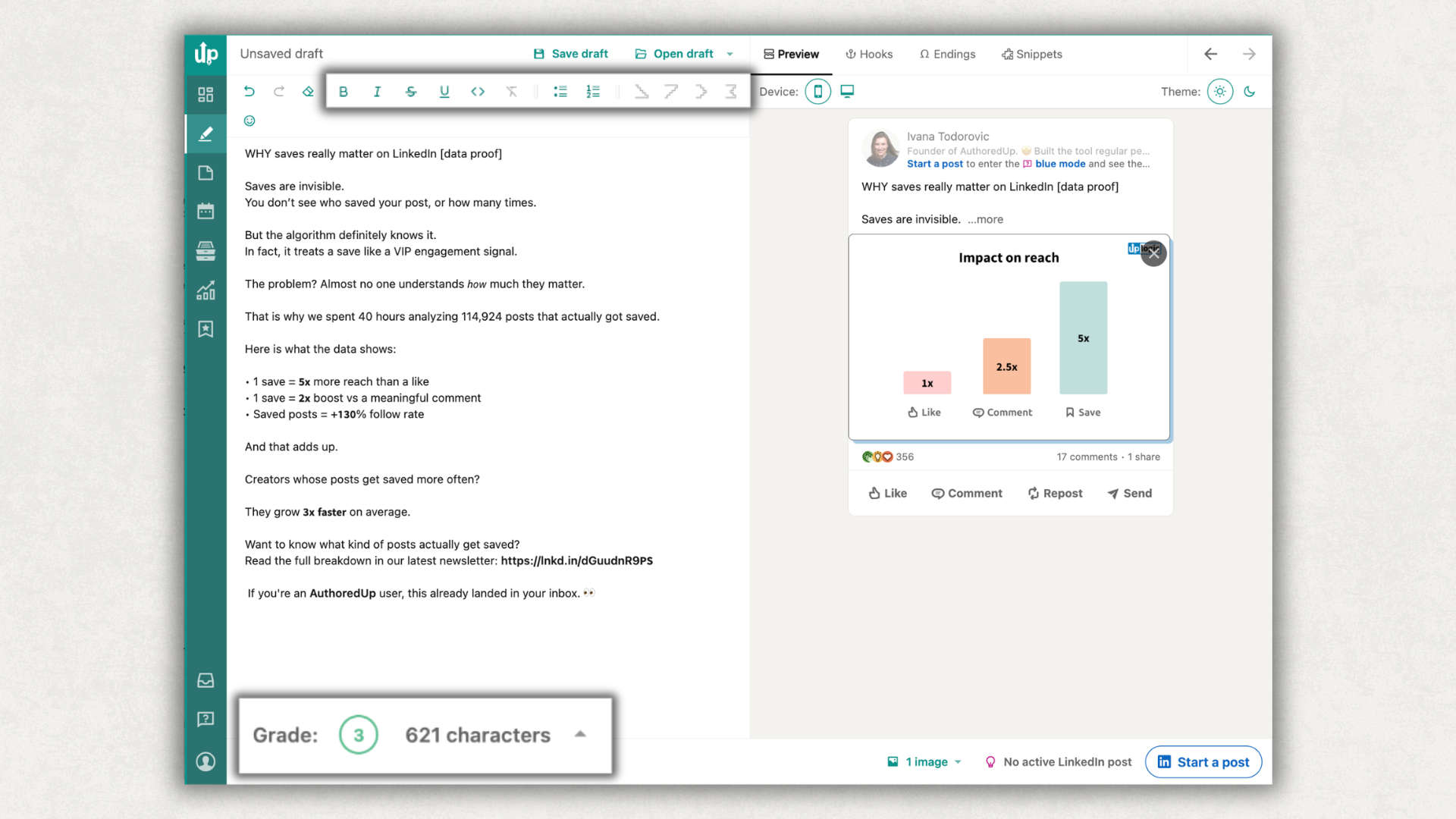
- Stay Consistent: Save reusable snippets for hashtags, intros, and signature phrases.
- Optimize Your Timing: Plan and schedule posts to maximize visibility.
With these tools, you’ll save time, amplify your voice, and deliver meaningful HR insights that stand out.
FAQ
What is an HR influencer?
An HR influencer is a human resources professional who shares insights, trends, and best practices within the HR industry. They shape industry standards and guide others by providing valuable content and thought leadership.
Can I reach out to HR influencers on LinkedIn?
Yes, you can connect with HR influencers on LinkedIn. Engaging with their content, sending personalized messages, or participating in discussions they initiate are effective ways to build a professional relationship.
How do top HR professionals influence others?
HR professionals influence others by sharing their expertise, offering guidance on career development, and implementing effective HR strategies. Their insights help shape organizational culture, improve employee engagement, and drive industry innovation.
What are the qualities of a good HR influencer?
A good HR influencer possesses authenticity, credibility, engagement, consistency, and the ability to provide value. They are genuine in their interactions, knowledgeable in their field, actively engage with their audience, consistently produce high-quality content, and offer insights that enrich their followers' professional lives.
What benefits do HR influencers provide?
HR influencers offer a wide range of benefits, including sharing innovative strategies and practical tips that help HR professionals stay ahead in a rapidly evolving field. They enhance skills and effectiveness in managing modern workforce challenges and provide guidance on career development, leadership skills, and personal growth tailored for HR professionals.
Read more
Discover 10 tips to create compelling LinkedIn posts that engage your audience and drive results.
Explore 9 creative content ideas tailored for recruiters to boost visibility and attract top talent.
Learn how to create a compelling LinkedIn summary that showcases your HR expertise.
.svg)
.png)

.svg)
.png)
.png)